|
|
|||
 |
 Get GP free via email ! |
 |
|
Avoiding Environmental DisasterArticle about manmade environmental disasters and solutions for avoiding civilization's collapse. Updated Mar-2010
Like the deer on St. Matthew Island, we too are overconsuming our natural resources. Overshoot leads sometimes to decline and sometimes to a complete collapse. It is not always clear which it will be. In the former, a remnant of the population or economic activity survives in a resource-depleted environment. For example, as the environmental resource base of Easter Island in the South Pacific deteriorated, its population declined from a peak of 20,000 several centuries ago to today's population of fewer than 4,000. In contrast, the 500-year-old Norse settlement in Greenland collapsed during the 1400s, disappearing entirely in the face of environmental adversity. The Link Between Population and Environmental DisasterPopulation growth places pressure on all of earth's systems, but food production is an area that well illustrates the issue. Each year there are 79 million more people at the global dinner table. As we prepare to feed a world population of 8 billion within the next two decades, we are entering a new food era. Early signs of this are the record-high grain prices of the last few years, the restriction on grain exports by exporting countries, and the acquisition of vast tracts of land abroad by grain-importing countries. And because some of the countries where land is being acquired do not have enough land to adequately feed their own people, the stage is being set for future conflicts between the so-called land grabbers and hungry local people. Even as we add more total mouths to feed, some 3 billion people are trying to move up the food chain, consuming more grain-intensive livestock products. In a given area,
Unfortunately, the overwhelming majority of population increase is being added in poor countries where soils are eroding, water tables are falling, and irrigation wells are going dry. If we cannot get the brakes on population growth, we may not be able to eradicate hunger and fix population-driven environmental disasters. Peaking Oil Supplies and Food SupplyEven as the economy's environmental support systems are deteriorating, the world is pumping oil with reckless abandon. Leading geologists now think oil production may soon peak and turn downward, and some believe we passed the peak of production in 2008.
In this new world, the price of oil begins to set the price of food, not so much because of rising fuel costs for farmers and food processors but more because almost everything we eat can be converted into fuel for cars. In this new world of high oil prices, supermarkets and service stations will compete in commodity markets for basic food commodities such as wheat, corn, soybeans, and sugarcane. Wheat going into the market can be converted into bread for supermarkets or ethanol for service stations. Soybean oil can go onto supermarket shelves or it can go to service stations to be used as diesel fuel. In effect, owners of the world's 800 million cars will be competing for food resources with the nearly 3 billion people living on less than $2 a day. Faced with a seemingly insatiable demand for automotive fuel, farmers will want to clear more and more of the remaining tropical forests to produce sugarcane, oil palms, and other high-yielding fuel crops. Already, billions of dollars of private capital have moved into this effort. In effect, the rising price of oil is generating a massive new threat to the earth's biological diversity. As the demand for farm commodities climbs, it is shifting the focus of international trade concerns from the traditional goal of assured access to markets to one of assured access to supplies. Countries heavily dependent on imported grain for food are beginning to worry that buyers for fuel distilleries may outbid them for supplies. As oil security deteriorates, so, too, will food security. As the role of oil recedes, the process of globalization will be reversed in fundamental ways. As the world turned to oil during the last century, the energy economy became increasingly globalized, with the world depending heavily on a handful of countries in the Middle East for energy supplies. Now as the world turns to wind, solar cells, and geothermal energy in this century, we are witnessing the relocalization of the world energy economy. The globalization of the world food economy will also be reversed, as the higher price of oil raises the cost of transporting food internationally. In response,
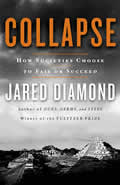
The world is facing the emergence of a geopolitics of scarcity, which is already highly visible in the efforts by China, India, and other developing countries to ensure their access to oil supplies. In the future, the issue will be who gets access to not only Middle Eastern oil but also Brazilian ethanol and North American grain. Pressures on land and water resources, already excessive in most of the world, will intensify further as the demand for biofuels climbs. This geopolitics of scarcity is an early manifestation of civilization in an overshoot-and-collapse mode, much like the one that emerged among the Mayan cities competing for food in that civilization's waning years. Environmental Disaster — Learning from the PastOur twenty-first century global civilization is not the first to face the prospect of environmentally induced economic decline. The question is, how we will respond. We do have one unique asset at our command—an archeological record that shows us what happened to earlier civilizations that got into environmental trouble and failed to respond. As Jared Diamond points out in Collapse: How Societies Choose to Fail or Succeed, some of the early societies that were in environmental trouble were able to change their ways in time to avoid decline and collapse. Six centuries ago, for example, Icelanders realized that overgrazing on their grass-covered highlands was leading to extensive soil loss from the inherently thin soils of the region. Rather than lose the grasslands and face economic decline, farmers joined together to determine how many sheep the highlands could sustain and then allocated quotas among themselves, thus preserving their grasslands and avoiding what Garrett Hardin later termed the "tragedy of the commons." The Icelanders understood the consequences of overgrazing and reduced their sheep numbers to a level that could be sustained. We understand the consequences of burning fossil fuels and the resulting CO2 buildup in the atmosphere. Unlike the Icelanders who were able to restrict their livestock numbers, we have not been able to restrict our CO2 emissions. The Sumerians' Environmental DisasterNot all societies have fared as well as the Icelanders, whose economy continues to produce wool and to thrive. The early Sumerian civilization of the fourth millennium BC was an extraordinary one, advancing far beyond any that had existed before. Its carefully engineered irrigation system gave rise to a highly productive agriculture, one that enabled farmers to produce a food surplus, supporting formation of the first cities. Managing the irrigation system required a sophisticated social organization. Not only did the Sumerians create the first cities, they developed the first written language, the cuneiform script. By any measure, Sumer was an extraordinary civilization, but there was an environmental flaw in the design of its irrigation system, one that would eventually undermine its food supply. The water that backed up behind dams built across the Euphrates was diverted onto the land through a network of gravity-fed canals. Some water was used by the crops, some evaporated, and some percolated downward. In this region, where underground drainage was weak, percolation slowly raised the water table. As the water climbed to within inches of the surface, it began to evaporate into the atmosphere, leaving behind salt. Over time, the accumulation of salt on the soil surface lowered its productivity. As salt accumulated and wheat yields declined, the Sumerians shifted to barley, a more salt-tolerant plant. This postponed Sumer's decline, but it was treating the symptoms, not the cause, of falling crop yields. As salt concentrations continued to build, the yields of barley eventually declined also. The resultant shrinkage of the food supply undermined the economic foundation of this once-great civilization. As land productivity declined, so did the civilization. Archeologist Robert McC. Adams has studied the site of ancient Sumer on the central floodplain of the Euphrates River, an empty, desolate area now outside the frontiers of cultivation. He describes how the "tangled dunes, long disused canal levees, and the rubble-strewn mounds of former settlement contribute only low, featureless relief. Vegetation is sparse, and in many areas it is almost wholly absent.... Yet at one time, here lay the core, the heartland, the oldest urban, literate civilization in the world." The Mayans' Environmental DisasterThe New World counterpart to Sumer is the Mayan civilization that developed in the lowlands of what is now Guatemala. It flourished
As with Sumer, the Mayan demise was apparently linked to a failing food supply. For this New World civilization, it was deforestation and soil erosion that undermined agriculture. Changes in climate may also have played a role. Food shortages apparently triggered civil conflict among the various Mayan cities as they competed for food. Today this region is covered by jungle, reclaimed by nature. Environmental Disaster on Easter IslandDuring the later centuries of the Mayan civilization, a new society was evolving on faraway Easter Island, some 166 square kilometers of land in the South Pacific roughly 3,200 kilometers west of South America and 2,200 kilometers from Pitcairn Island, the nearest habitation. Settled around AD 400, this civilization flourished on a volcanic island with rich soils and lush vegetation, including trees that grew 25 meters tall with trunks 2 meters in diameter. Archeological records indicate that the islanders ate mainly seafood, principally dolphins—a mammal that could only be caught by harpoon from large sea-going canoes. The Easter Island society flourished for several centuries, reaching an estimated population of 20,000. As its human numbers gradually increased, tree cutting exceeded the sustainable yield of forests. Eventually the large trees that were needed to build the sturdy canoes disappeared, depriving islanders of access to the dolphins and dramatically shrinking their food supply. The archeological record shows that at some point human bones became intermingled with the dolphin bones, suggesting a desperate society that had resorted to cannibalism. Today the island has some 2,000 residents. Awareness of Impending Environmental DisasterOne unanswerable question about these earlier civilizations was whether they knew what was causing their decline. Did the Sumerians understand that the rising salt content in the soil from water evaporation was reducing their wheat yields? If they knew, were they simply unable to muster the political support needed to lower water tables, just as the world today is struggling unsuccessfully to lower carbon emissions? These are just three of the many early civilizations that moved onto an economic path that nature could not sustain. We, too, are on such a path. Any one of several trends of environmental degradation could undermine civilization as we know it. Just as the irrigation system that defined the early Sumerian economy had a flaw, so too does the fossil fuel energy system that defines our modern economy. For them it was a rising water table that undermined the economy; for us it is rising CO2 levels that threaten to disrupt economic progress. In both cases, the trend is invisible. If recent environmental trends continue, today's global economy eventually will come crashing down. It is not knowledge that we lack. At issue is whether national governments can stabilize population and restructure the economy before time runs out. Plan B — A Plan of HopeEven given the extraordinarily challenging situation we face, there is much to be upbeat about. First, virtually all of the destructive environmental trends are of our own making. All of the problems we face can be dealt with using existing technologies. And almost everything we need to do to move the world economy onto an environmentally sustainable path has been done in one or more countries. We see the components of Plan B—the alternative to business as usual—in new technologies already on the market. On the energy front, for example, an advanced-design wind turbine can produce
Numerous countries are providing models of the different components of Plan B. Denmark, for example, today gets 20% of its electricity from wind and has plans to push this to 50% by 2030. Brazil, using highly efficient sugarcane-based ethanol, could achieve automotive fuel self-sufficiency within a matter of years. With food, India—using a small-scale dairy production model that relies almost entirely on crop residues as a feed source—has more than quadrupled its milk production since 1970, overtaking the United States to become the world's leading milk producer. Fish farming advances in China, centered on the use of an ecologically sophisticated carp polyculture, have made China the first country where fish farm output exceeds oceanic catch. The United States—which retired one tenth of its cropland, most of it highly erodible, and shifted to conservation tillage practices—has reduced soil erosion by 40% over the last 20 years. At the same time, the nation's farmers expanded the grain harvest by more than one fifth. We see what a Plan B world could look like in the reforested mountains of South Korea. Once a barren, almost treeless country, the 65% of South Korea now covered by forests has checked flooding and soil erosion, returning a high degree of environmental stability to the Korean countryside. Some of the most innovative leadership has come at the urban level. Amsterdam has developed a diverse urban transport system; today 35% of all trips within the city are taken by bicycle. This bicycle-friendly transport system has greatly reduced air pollution and traffic congestion while providing daily exercise for the city's residents. The ChallengeParticipating in the construction of this enduring new economy is exhilarating. So is the quality of life it will bring. We will be able to breathe clean air. Our cities will be less congested, less noisy, and less polluted. The prospect of living in a world where population has stabilized, forests are expanding, and carbon emissions are falling is an exciting one.
Know someone who might find this article about Avoiding Environmental Disaster interesting? Please forward it to them.
|
FREE AUDIO CLIPS 
Back to After School Cartoon / Television Joke ADVERTISEMENT |
|
||||||||||||||||||||||||||||||||||||||||||||||||||||||||
| > | ||||||||
| > |  |
 |
Get Grinning Planet free by email |  |
Send this page to a friend or two | |||
| > |
Issue Number 151 Copyright 2010 © Mark Jeantheau — All rights reserved. More info |
|||||||
 |
 |
|||||||
|


 Environmentalists and others who speak of approaching environmental disasters are often portrayed as pansy-headed doom-and-gloomers who just don't know how to relax and enjoy life. But it's bone-headed to think that we can live outside the laws of nature forever simply because the technological advances of the last century have allowed us to arrive at such a position. Nature can and does "snap back" from time to time.
 the new economy will be powered by abundant sources of renewable energy: wind, solar, geothermal, hydropower, and biofuels.
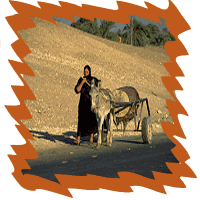 deteriorating rangelands, dying coral reefs, melting glaciers, rising seas, more-powerful storms, disappearing species, and, soon, shrinking oil supplies. Although these ecologically destructive trends have been evident for some time, and some have been reversed at the national level, not one has been reversed at the global level.
 as human and livestock populations grow more or less in parallel, the rising demand for forage eventually exceeds the sustainable yield of grasslands. As a result, the grass deteriorates, the land grows bare and eventually turns to desert. At some point, the ability of livestock to survive in the area also collapses.
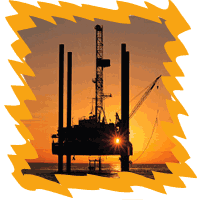 This collision between the ever-growing demand for oil and the finiteness of the resource is but the latest in a long series of collisions. Although the actual date of the peak will only be seen in the rear-view mirror of historical data, supply is already lagging behind demand, driving prices upward.
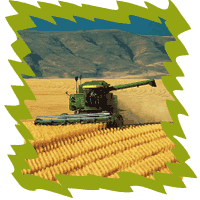 food production and consumption will become much more localized, leading to diets based more on
 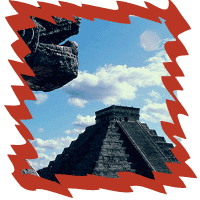 from AD 250 until its collapse around AD 900. Like the Sumerians, the Mayans had developed a sophisticated, highly productive agriculture, this one based on raised plots of earth surrounded by canals that supplied water.
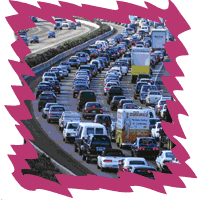 as much energy as an oil well. Japanese engineers have designed a vacuum-sealed refrigerator that uses only one eighth as much electricity as those marketed a decade ago. Gas-electric hybrid automobiles, getting 55 miles per gallon, are easily twice as efficient as the average vehicle on the road.