| |
PEAK OIL BOOKS
This page has peak oil books as well as books about peak energy.
| |
PEAK OIL BOOK SECTIONS |
| |
Also see:
|
|
|
This page features all the best peak oil books as well as books about the politics of peak oil, alternative energy sources as they relate to peak oil/peak energy, and general books about energy that would be of interest to those interested in peak oil.
|
For reviews, to see sample pages, or to get purchase info,
click on any title to go to Amazon.com
| |
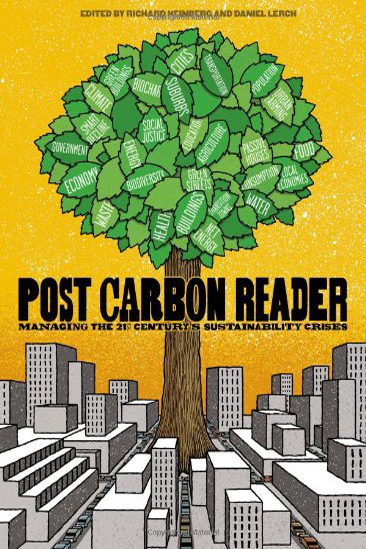 |
The Post Carbon Reader (by Richard Heinberg, Daniel Lerch)
Managing the 21st Century's Sustainability Crises
In the 20th century, cheap and abundant energy brought unimaginable advances in health, wealth, and technology. But this growth came at an incredible cost, leaving us with a global sustainability quandary. The Post Carbon Reader features articles by some of the world's most provocative thinkers on the key drivers shaping this new century, from renewable energy and urban agriculture to social justice and systems resilience.
|
| |
| |
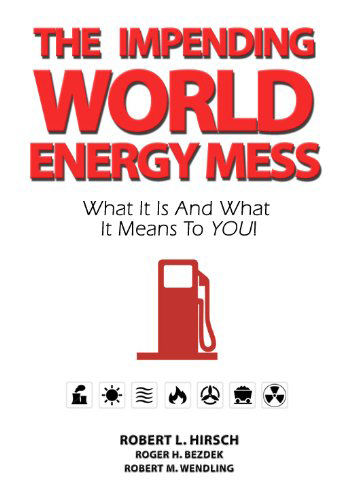 |
The Impending World Energy Mess
(by Robert Hirsch, Roger Bezdek, Robert Wendling)
The Impending World Energy Mess will help educate readers about the realities of energy in general and oil in particular. The economic impacts associated with impending oil shortages are brought into perspective and readers are given tools to minimize negative impacts on their personal lives. The authors provide you the straight story, including realities that others have been reluctant to discuss.
|
| |
| |
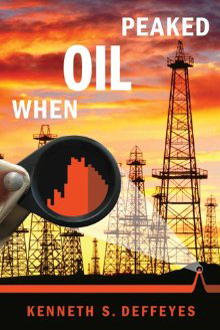 |
When Oil Peaked (by Kenneth Deffeyes)
Deffeyes thinks that the continued depletion of existing oil fields, compounded by shortsighted cutbacks in many exploration and development projects, virtually assures that the mid-2000s peak in global oil production will never be surpassed. He examines the arguments that have been made by both peak oil protagonists and peak oil deniers, and applies the same mode of analysis to a number of other finite "gifts from the Earth."
|
| |
| |
 |
A User's Guide to the Crisis of Civilisation (by Nafeez Ahmed)
And How to Save It
This book argues that financial meltdown, dwindling oil reserves, terrorism, and food shortages must be considered as part of the same ailing system. Nafeez Ahmed argues that the unwillingness of experts to look outside their specializations explains why there is so much disagreement and misunderstanding about particular crises. This book provides a stark warning of the consequences of failing to take a broad view of the problems facing the world.
|
| |
| |
 |
Peak Oil and the Second Great Depression (by Kenneth Worth)
A Survival Guide for Investors and Savers After Peak Oil
In Peak Oil and the Second Great Depression, the author argues that global oil production has already peaked. . Rising prices associated with supply constraints and debt imbalances will drive Western oil-importing countries into a new, decades-long depression. The policy response is likely to be to use intentional, massive inflation to ease the debt burden. The book guides investors on the issues of asset allocation and sector weighting, as well as alternative investments in commodities and real estate.
|
| |
ADVERTISEMENT
For reviews, to see sample pages, or to get purchase info, click on any title to go to Amazon.com
| |
 |
Confronting Collapse (by Michael C. Ruppert)
The Crisis of Energy and Money in a Post Peak Oil World
We have been lied to about the stock market, AIG, Citigroup, hedge funds, mortgages, Ponzi-schemes, 401(k)s, the invasion of Iraq... even steroids in baseball. Why accept as truth everything we have been told about energy? Most energy information comes from the same corporate entities that have misled us about everything else...
→ Read full description for Michael Ruppert's "Confronting Collapse"
→ Check out the book on Amazon.com
→ Note: Book was original issued under title "A Presidential Energy Policy"
|
| |
| |
 |
Future Scenarios (by David Holmgren)
How Communities Can Adapt to Peak Oil and Climate Change
Future Scenarios outlines four scenarios to imagine how particular peak oil and climate change strategies might thrive, fail, or be transformed. Two climate change futures (1–mild, 2–severe) are matrixed with two energy decline futures (a–slow, b–severe) to result in scenarios 1a, 1b, 2a, and 2b. In these four very different futures, solutions such as green technology and lifeboat communities are vetted for how well they might fare.
|
| |
| |
 |
The Ecotechnic Future (by John Michael Greer)
Envisioning a Post-Peak World
In response to the coming impact of peak oil, John Michael Greer helps us envision the transition from an industrial society to a sustainable "ecotechnic" world—not returning to the past, but creating a society that supports relatively advanced technology on a sustainable resource base. Human societies, like ecosystems, evolve in complex and unpredictable ways, making it futile to try to impose rigid ideological forms on the patterns of evolutionary change. Instead, social change must explore many pathways over which we have no control. The troubling and exhilarating prospect of an open-ended future, he proposes, requires dissensus—a deliberate acceptance of radical diversity that widens the range of potential approaches to infinity.
|
| |
| |
 |
Localist Movements in a Global Economy (by David J. Hess)
Sustainability, Justice, and Urban Development in the United States
David Hess offers an overview of localism in the United States and assesses its potential to address the problems of economic stability, political sovereignty, social justice, and environmental sustainability. His perspective is not that of an uncritical localist advocate; he draws on new empirical research to assess the extent to which localist policies can succeed. The book includes an examination of four specific forms of localism: "buy local" campaigns; urban agriculture; local ownership of electricity and transportation; and alternative and community media.
|
| |
| |
 |
Why Your World Is About to Get a Whole Lot Smaller
Oil and the End of Globalization (by Jeff Rubin)
The rising price and diminishing availability of oil are going to radically change our lives. Jeff Rubin explores what the new global economy will look like and what it will mean for all of us. The amount of food and other goods we get from abroad will be curtailed; globalization as we know it will reverse. Long-distance driving will become a luxury and international travel rare. Rubin prescribes policy priorities, from imposing carbon tariffs that will increase competition and productivity, to investing in mass transit instead of car-clogged highways, to forging "green" alliances between labor and management. Rubin suggests ways every citizen can take action that will end our enslavement to chain-store taste and strengthen our communities and human values.
|
| |
| |
 |
The Transition Timeline
For a Local, Resilient Future (by Shaun Chamberlin)
The Transition Timeline describes four possible scenarios for the UK and world over the next twenty years, ranging from the Denial scenario, in which we reap the consequences of failing to acknowledge and respond to our energy and environmental challenges, to the Transition Vision, in which we shift our lifestyle assumptions to fit the circumstances of our reality and shift to a lower energy but more fulfilling world. The details of this Transition Vision are examined in depth, covering key areas such as food, energy, demographics, transport, and healthcare, providing context and direction for communities working towards a thriving future.
|
| |
| |
 |
Carbon Shift How the Twin Crises of Oil Depletion and Climate Change Will Define the Future (by Thomas Homer-Dixon)
The twin crises of climate change and peaking oil production are converging on us. Thomas Homer-Dixon argues that the two problems are really one: a carbon problem. We depend on carbon energy to fuel our complex economies and societies, and at the same time this very carbon is changing our atmosphere in a manner that threatens to overheat the planet. Both challenges require one innovative solution: clean, low-carbon energy. Carbon Shift brings together six world-class experts to explore the geology, politics, and science of the predicament we find ourselves in.
|
| |
| |
 |
Sacred Demise (by Carolyn Baker)
Walking The Spiritual Path of Industrial Civilzation's Collapse
The collapse of industrial civilization is rapidly unfolding and offers us an opportunity far beyond mere survival, even as it renders absurd any attempts to "fix" or prevent the end of the world as we have known it. Sacred Demise is about the transformation of human consciousness and the emergence of a new paradigm as a result discovering our purpose in the collapse process, thereby coming home to our ultimate place in the universe. Our willingness to consciously embark on the journey with openness and uncertainty may be advantageous for engendering an evolutionary leap for our species and for the earth community.
|
| |
| |
 |
Resilient Cities (by Timothy Beatley, Heather Boyer, Peter Newman)
Responding to Peak Oil and Climate Change
Half of the world's inhabitants now live in cities. With their inefficient transportation systems and poorly designed buildings, many cities consume enormous quantities of fossil fuels and emit high levels of greenhouse gases. Between the twin problems of dwindling carbon-based fuels and rising climate change effects, are the world's cities headed for inevitable collapse? The authors believe that intelligent planning and visionary leadership can help cities meet the impending crises, and look to existing initiatives in cities around the world. They offer ten strategic steps that any city can take toward greater sustainability and resilience.
|
| |
| |
 |
Depletion and Abundance (by Sharon Astyk)
Life on the New Home Front
We are living beyond our means—with or without a peak-oil/climate-change crisis—and either way, we must learn to place our families and local communities at the center of our thinking once again. Depletion and Abundance presents strategies to survive and thrive in an economy in crisis; to live comfortably with an uncertain energy supply; to create stronger homes, better health, a richer family life; to prepare children for a hotter, lower energy, less secure world; and to maintain a kitchen garden to supply basic food needs. Most importantly, readers will discover that depletion can lead to abundance, and that the anxiety of these uncertain times can be turned into a gift of hope and action.
|
| |
| |
 |
The Long Descent (by John Michael Greer)
A User's Guide to the End of the Industrial Age
Americans are expressing deep concern about the country's converging crises, including rising energy prices and the threat of climate disruption. Unlike the energy crises of the 1970s, however, there is a lurking fear that this time the crisis may not be resolved easily. The Long Descent examines how our current industrial society is following the same well-worn path that has led other civilizations into decline, how the roots of the crisis lie in the cultural myths that shape the way we understand the world, and how our problems cannot be solved with the same thinking that created them. It is too late for massive programs of top-down change; the change must come from individual action. Greer lays out a plan for constructive adaptation to massive change.
|
| |
| |
 |
Reinventing Collapse (by Dmitry Orlov)
The Soviet Example and American Prospects
In the waning days of the American empire, we find ourselves mired in crises, with multiple foreign-policy messes and our economy in steep decline. These trends mirror the experience of the Soviet Union in the early 1980s. Reinventing Collapse examines the circumstances of the USSR's demise and offers insights into how we might prepare for coming events here in the US: (1) Mitigation—alleviating the impact of the coming upheaval; (2) Adaptation—adjusting to the reality of changed conditions; (3) Opportunity—flourishing after the collapse.
|
| |
| |
 |
Peak Everything
Waking Up to the Century of Declines (by Richard Heinberg)
The 20th century saw unprecedented growth in energy availability, food production, and population. The 21st century will be the era of declines—in oil, natural gas, and coal availability; in critical minerals and ores, such as copper and platinum; in fresh water availability and grain harvests; in climate stability; in economic growth; and, ultimately, in global population. To adapt to this profoundly different world, we must begin now to make radical changes to our attitudes, behaviors, and expectations. A combination of wry commentary and sober forecasting on subjects as diverse as farming and industrial design, this book tells how we might make the transition from The Age of Excess to the Era of Modesty with grace and satisfaction, while preserving the best of our collective achievements.
|
| |
| |
 |
Post Carbon Cities Planning for Energy and Climate Uncertainty
This is a guidebook on peak oil and global warming for people who work for local governments in the United States and Canada—or those who want to be effective in trying to steer their local municipality in the right direction. Post Carbon Cities provides a sober look at how peak oil and global climate disruption are quickly creating new uncertainties and vulnerabilities for cities of all sizes, and explains what local decision-makers can do to address these challenges. (by Daniel Lerch, Post Carbon Institute)
|
| |
| |
 |
The Last Oil Shock (by David Strahan)
A Survival Guide to the Imminent Extinction of Petroleum Man
Draining the lifeblood of industrial civilization, the terminal decline of oil and natural-gas production will spark a crisis far more dangerous than international terrorism, and just as urgent as climate change. World leaders know it, so why aren't they telling? The last oil shock is the secret behind the crises in Iraq and Iran, the reason your gas bill is going through the roof, the basis of a secret deal cooked up in Texas between George Bush and Tony Blair, and the cause of an imminent and unprecedented economic collapse. David Strahan explains how we reached this critical state, how the silence of governments, oil companies and environmentalists conspires to keep the public in the dark, what it means for energy policy, and what you can do to protect yourself and your family from the ravages of the last oil shock.
|
| |
| |
 |
Untapped The Scramble for Africa's Oil
With crude oil supplies tightening and prices skyrocketing, Africa has become the scene of a competition between major powers that recalls the nineteenth-century scramble for colonization there. Already the United States imports more of its oil from Africa than from Saudi Arabia; and China, too, looks to the continent for its energy security. John Ghazvinian explains what this giddy new oil boom means—for America, for the world, and for Africans themselves. (by John Ghazvinian)
|
| |
| |
 |
The Upside of Down (by Thomas Homer-Dixon)
Catastrophe, Creativity, and the Renewal of Civilization
Peak oil is upon us, we have ever-worsening environmental degradation, and we face a deepening global financial crisis. We at GP also feel frustration at the seeming impossibility of solving our problems within the iron envelope of today's reigning free-market plutocracy. Thus it should be no surprise that we were pleased to see a book explained how reframe this troubled situation and strategize to take advantage of any coming chaos. The book's title is The Upside of Down—Catastrophe, Creativity, and the Renewal of Civilization, by Thomas Homer-Dixon.
Read full review of The Upside of Down
|
| |
| |
 |
Eating Fossil Fuels Oil, Food, and the Coming Crisis in Agriculture
For decades now, cheap fossil fuels have increased crop yields by providing artificial fertilizer, pesticides, irrigation, and mechanization. Ten calories of hydrocarbon energy are required to produce one calorie of food. Such an imbalance cannot continue in a world of diminishing hydrocarbon resources. The book explores the problem and urges a transition to a sustainable, re-localized agriculture plus adoption of measures to address overpopulation. (by Dale Allen Pfeiffer)
|
| |
| |
 |
The Oil Depletion Protocol (by Richard Heinberg)
A Plan to Avert Oil Wars, Terrorism, and Economic Collapse
Since oil is the primary fuel of global industrial civilization, its imminent depletion is a problem that will have a profound impact on every aspect of modern life. Without international agreement on how to manage the decline of this vital resource, the world faces unprecedented risk of conflict and collapse. The Oil Depletion Protocol proposes a unique accord whereby nations would voluntarily reduce their oil production and oil imports according to a consistent, sensible formula, enabling our energy transition to be planned and managed over the long term.
|
| |
See more General Peak Oil Books in the Classic/Older section
For reviews, to see sample pages, or to get purchase info, click on any title to go to Amazon.com
| |
 |
Survival+ (by Charles Hugh Smith)
Structuring Prosperity for Yourself and the Nation
This guide to the next twenty years of global turmoil and transformation weaves the full spectrum of disciplines—history, political economy, ecology, energy, marketing, investing, health, and the psychology of happiness—into a comprehensive understanding that offers practical principles for not just surviving but prospering in the difficult decades ahead.
|
| |
| |
 |
Twelve by Twelve (by William Powers)
A One-Room Cabin Off the Grid and Beyond the American Dream
Why would a successful American physician choose to live in a twelve-foot-by-twelve-foot cabin without running water or electricity? To find out, writer and activist William Powers visited Dr. Jackie Benton in rural North Carolina. No Name Creek gurgled through Benton's permaculture farm as she shared her wildcrafter philosophy of living on a planet in crisis. Benton is just part of the many pockets of resistance—including small organic farmers, biofuel brewers, eco-developers—that are discovering sustainable ways of living.
|
| |
| |
 |
The Modern Survival Manual (by Fernando Ferfal Aguirre)
Surviving the Economic Collapse
Many of us have decided to be prepared for tougher times. But the types of trouble we may encounter in decline, disruptions, or collapse cannot be predicted with perfect clarity. To prepare smartly, learning from history is essential. Based on first-hand experiences during the 2001 economic collapse in Argentina, The Modern Survival Manual offers suggestions on how to prepare yourself and your family so you don't suffer what millions have endured in previous collapses. It covers finances, home, vehicle, food shortages, power failures, self-defense techniques, situational awareness, and more.
|
| |
| |
 |
The Ultimate Suburban Survivalist Guide (by Sean Brodrick)
The Smartest Money Moves to Prepare for Any Crisis
In the face of disaster it is better to plan than panic. From a meltdown in the stock market to the next oil crisis or fires and floods, a good plan can protect you from ugly consequences. Sean Brodrick offers practical advice for overcoming some of the worst possible disasters; gives in-depth information on protecting yourself, your family, and your assets from uncontrollable events; and details money saving strategies that will help you get through the difficult times.
|
| |
| |
 |
Sustainable Wealth (by Axel Merk)
Achieve Financial Security in a Volatile World of Debt and Consumption
Sustainable Wealth empowers you to achieve your financial goals by unleashing the shackles of debt, no matter how uncertain the future may be. Axel Merk puts your financial decisions in a global context and shows how factors ranging from the Federal Reserve and Congress to trends in Asia and Europe influence your financial well-being. He explains how to recognize major economic trends before they happen and how to build a legacy of wealth, not a mountain of debt.
|
| |
| |
 |
How to Survive the End of the World as We Know It
Tactics, Techniques, and Technologies for Uncertain Times
(by James Wesley Rawles)
From a terrorist attack to a pandemic to a sharp currency devaluation, it would only take one unthinkable event to disrupt our way of life. If you are forced to fend for yourself, where would you get water? How would you communicate with relatives who live in other states? What would you use for fuel? Survivalist expert James Wesley Rawles shares the essential tools and skills you will need for you family to survive. The book's topics include water, food, and storage; fuel and home power; gardens, orchard trees, and small livestock; medical supplies and training; communications; home security; investing and barter.
|
| |
| |
 |
The Human-Powered Home
Choosing Muscles Over Motors (by Tamara Dean)
Human power is a very old, practical, and empowering alternative to fossil fuels. Some of the advantages: portable and available on-demand; close connection to the process or product; improved health and fitness. The Human-Powered Homeoffers plans for making specific devices, grouped by area of use, and features dozens of individuals who share technical details and photos of their inventions.
|
| |
| |
 |
Food Security for the Faint of Heart
Keeping Your Larder Full in Lean Times (by Robin Wheeler)
Robin Wheeler extracts logic from hysteria, packages it with a strong environmental perspective, an abundance of practical suggestions, and good humor. Written for anyone interested in surviving whatever disaster comes along, this book will appeal to both long-time food security advocates and newcomers. Chapters are devoted to useful, transferable skills, including: preserving garden food; saving freezer food during a power outage; managing through an earthquake; preparing quick herbal medicinals; foraging for wild food.
|
| |
| |
 |
Plan C (by Pat Murphy)
Community Survival Strategies for Peak Oil and Climate Change
Climate change and energy depletion problems are increasing exponentially. Head-in-the-sand politicians and pundits are still focusing on silver-bullet solutions that will cure these ills without requiring any modification to our supposedly sacrosanct way of life. Murphy explores the risks inherent in the two chosen methods of trying to continue society's energy-intensive lifestyle—using dirtier fossil fuels (Plan A), or trying to maintain the status quo by "switching transparently" to renewable energy sources (Plan B). Murphy explains how Plan C—dramatic lifestyle change—is the only way to truly begin to create a sustainable, equitable, survivable world.
|
| |
| |
 |
When Technology Fails
A Manual for Self-Reliance and Planetary Survival (by Matthew Stein)
When Technology Fails provides information that will help the average person become more self-reliant, outlining survival strategies for dealing with changes that affect food, water, shelter, energy, health, communications, and essential goods and services. In an era of super-storms, burgeoning population, massive earth-quakes, global warming, and record-breaking floods and droughts, more and more people are seeking to prepare themselves to deal with the difficult times that may lie ahead.
|
| |
| |
 |
Small is Possible
Life in a Local Economy (by Lyle Estill)
In an era when incomprehensibly complex issues like Peak Oil and climate change dominate headlines, practical solutions at a local level can seem somehow inadequate. But they aren't! Lyle Estill introduces us to "hometown security" with this chronicle of a community-powered response to resource depletion in a fickle global economy. This is the story of how one small southern US town, not willing to rely on the government and wary of large corporations, discovered it is possible for a community to feed itself, fuel itself, heal itself, and govern itself.
|
| |
| |
 |
Peak Oil Survival Preparation for Life After Gridcrash
Oil and energy are not limitless resources, and someday the supply will be depleted. Peak Oil Survival shows readers how to plan for the future: how to survive and thrive when the food, transport, and energy industries sputter out. Aric McBay gives an essential crash course, complete with instructions easy-to-read and diagrams. Learn how you can protect your family and strengthen your community in advance of the crisis—and live comfortably off the grid. (by Aric McBay)
|
| |
| |
 |
Emergency Food Storage & Survival Handbook
Everything You Need to Know to Keep Your Family Safe in a Crisis
Do you have a plan in the event that your power, telephone, water and food supply are cut off during a relatively short-term emergency? What about for an extended amount of time? How prepared are you? With this guide by your side, you and your family will learn how to plan, purchase, and store a three-month supply of all the necessities—food, water, fuel, first-aid supplies, clothing, bedding, and more—simply and economically. (by Peggy Layton)
|
| |
| |
 |
Storey's Basic Country Skills
A Practical Guide to Self-Reliance (by John and Martha Storey)
This is the book for anyone who wants to become more self-reliant, from suburbanites with 1/4 of an acre to country homesteaders with several. The information is easily understood and readily applicable. More than 150 of Storey's expert authors in gardening, building, animal raising, and homesteading share their specialized knowledge and experience in this ultimate guide to living a more independent, satisfying life.
|
| |
| |
 |
Food Not Lawns (by Heather C. Flores)
Turn Your Yard into a Garden And Your Neighborhood into a Community
Activist and urban gardener Heather Flores shares her nine-step permaculture design to help farmsteaders and city dwellers alike build fertile soil, promote biodiversity, and increase natural habitat in their own "paradise gardens." This joyful permaculture lifestyle manual inspires readers to apply the principles of the paradise garden—simplicity, resourcefulness, creativity, mindfulness, and community—to all aspects of life. Flores shows us how to reclaim the earth one garden at a time.
|
| |
| |
 |
The Post-Petroleum Survival Guide and Cookbook
Recipes for Changing Times (by Albert Bates)
Over the coming years, we will necessarily move from a globalized culture that is addicted to cheap, abundant petroleum and material goods to a culture of greater austerity, conservation, and localization. This book provides practical advice for preparing your family and community to make the transition. Topics covered include: water supply and waste disposal; energy and transportation; equipment and tools; first aid; food storage; and recipes using basic, wholesome foods.
|
| |
| |
 |
Gardening When It Counts
Growing Food in Hard Times (by Steve Solomon)
In hard times, families can be greatly helped by growing a highly productive food garden. Gardening When It Counts helps readers rediscover traditional low-input gardening methods to produce healthy food, showing how a family can halve their food costs using a growing system requiring just an occasional bucketful of water, a couple hundred dollars worth of hand tools, and about the same amount spent on supplies, working just an average of two hours a day during the growing season.
|
| |
| |
 |
Putting Food By (by Janet Greene, Ruth Hertzberg, Beatrice Vaughan)
This classic guide to freezing, canning, and preserving food covers basics like boiling-water baths, pressure canners, canning seafood and poultry, and freezing convenience foods. The fourth edition also includes new information on freezing for the microwave, making Christmas presents, canning convenience food, and kitchen equipment.
|
| |
| |
 |
Seed to Seed (by Suzanne Ashworth)
Seed Saving and Growing Techniques for Vegetable Gardeners
Seed to Seed is a complete seed-saving guide that describes specific techniques for saving the seeds of 160 different vegetables. This book contains detailed information about siting plants, plant population sizes, isolation distances, pollination, and proper methods for harvesting, drying, cleaning, and storing the seeds of each variety. Seed to Seed is widely acknowledged as the best guide available for home gardeners to learn effective ways to produce and store seeds on a small scale.
|
| |
| |
 |
The Backyard Orchardist (by Stella Otto)
A Complete Guide to Growing Fruit Trees in the Home Garden
This book is for every gardener desiring to add apples, pears, cherries, and other 'tree fruit' to their landscape. Written by a professional horticulturist and experienced fruit grower, and tips on harvesting and storing fruit. Those with limited space will learn about growing dwarf fruit trees in containers. Appendices include a fruit-growers monthly calendar, a trouble-shooting guide for reviving ailing trees, and a resource list of nurseries selling fruit trees.
|
| |
| |
 |
The Backyard Berry Book A Hands-On Guide to Growing Berries, Brambles, and Vine Fruit in the Home Garden (by Stella Otto)
Stella Otto explains how to raise lush crops of berries, with pointers on soil nutrition, plant nutrients and mulching that will make your home-grown berries the envy of folks who have only seen berries in containers at the supermarket.
|
| |
| |
 |
Cooking with Sunshine (by Lorraine Anderson, Rick Palkovic)
The Complete Guide to Solar Cuisine with 150 Easy Sun-Cooked Recipe
Solar cooking—a safe, simple cooking method using the sun's rays as the sole heat source—has been known for centuries and can be done, at least during the summer, in just about any place where there's sun. Cooking with Sunshine provides everything you need to know to cook great sun-fueled meals, including how solar cooking works, its benefits over traditional methods, how to build your own inexpensive solar cooker, and more than 100 tasty solar-cooking recipes that emphasize healthy ingredients.
|
| |
| |
 |
The Solar Food Dryer How to Make and Use Your Own High-Performance, Sun-Powered Food Dehydrator (by Eben Fodor)
The Solar Food Dryer describes how to dry your food using solar energy instead of costly electricity. With your own solar-powered food dryer, you can quickly and efficiently dry all your extra garden veggies, fruits, and herbs to preserve their goodness all year long. Includes basic concepts of solar energy design; complete step-by step plans for building a high-performance, low-cost solar food dryer from readily-available materials; food drying tips and recipes; resources, references, solar charts, and more.
|
| |
| |
 |
Root Cellaring
Natural Cold Storage of Fruits & Vegetables (by Mike Bubel, Nancy Bubel)
Anyone can learn to store fruits and vegetables safely and naturally with a cool, dark space (even a closet!). Root cellaring, as many people remember but few still practice, is a way of using the earth's naturally cool, stable temperature to store perishable fruits and vegetables. It's a simple, low-cost, low-technology, energy-saving way to keep the harvest fresh all year long. In this book, root-cellaring gurus Mike and Nancy Bubel provide step-by-step advice on how to successfully use this natural storage approach.
|
| |
| |
 |
Backyard Market Gardening
The Entrepreneur's Guide to Selling What You Grow (by Andrew W. Lee)
Discover how easy and profitable it is to grow and sell vegetables, fruits, flowers, herbs, and small livestock from your own backyard garden. Learn how to earn top dollar, with minimum effort and maximum profits; buy or build tools that speed your work and increase profits; enjoy a guaranteed salary from community supported agriculture or a membership garden. Though written in 1992, this book remains a very useful guide today.
|
| |
| |
 |
Farewell, My Subaru An Epic Adventure in Local Living
Like many Americans, Doug Fine enjoys his creature comforts, but he also knows they keep him addicted to oil. So he wonders: Is it possible to keep his Netflix and his car, his Wi-Fi and his subwoofers, and still reduce his carbon footprint? Fine moves to a remote ranch in New Mexico, where he vows to grow his own food, use sunlight to power his world, and drive on used restaurant grease. Never mind that he’s never raised so much as a chicken or a bean, or that he has no mechanical or electrical skills. Fine's extraordinary undertaking makes one thing clear: It ain't easy being green. In fact, his journey uncovers a slew of surprising facts about alternative energy, organic and locally grown food, and climate change. (by Doug Fine)
|
| |
| |
 |
Just In Case (by Kathy Harrison)
How To Be Self-Sufficient When The Unexpected Happens
When the power fails, prepared families settle in, stay warm, and eat well. Kathy Harrison guides readers through her OAR method: Organize existing supplies, Acquire additional necessities, Rotate everything for freshness. Her comprehensive coverage of emergency preparedness includes food storage, alternative heating sources, personal supplies for every family member, entertainment ideas, toiletry and proper clothing, pet supplies, emergency family communication plans, and neighborhood cooperatives.
|
| |
| |
 |
Your Money or Your Life (by Vicki Robin, Joe Dominguez)
9 Steps to Transforming Your Relationship with Money and Achieving Financial Independence (Revised and Updated for the 21st Century)
In an age of great economic uncertainty when everyone is concerned about money, Your Money or Your Life tells you how to: get out of debt and develop savings; reorder material priorities and live well for less; resolve inner conflicts between values and lifestyle; save the planet while saving money; and much more. The book shows readers how to gain control of their money and finally begin to make a life, rather than just make a living.
|
| |
Related books page: Food-Gardening Books
For reviews, to see sample pages, or to get purchase info, click on any title to go to Amazon.com
| |
 |
The Witch of Hebron (by James Kunstler)
A World Made by Hand Novel
In the sequel to World Made by Hand, Kunstler expands on his vision of an American post-oil society. Electricity,, the Internet,, and government are still absent,. and the tiny hamlet of Union Grove finds itself in battles over dwindling resources, with bandits roaming the countryside, preying on the weak. Illness is a constant presence. And now, a sinister cult threatens to shatter Union Grove's fragile stability. Kunstler weaves issues such as the decline of oil and the perils of climate change into a narrative of violence, religious hysteria, innocence lost, and love found.
|
| |
| |
 |
One Second After (by William Forstchen)
REVIEW: When every electronic device in a small North Carolina town stops working, the cleverer residents surmise that the cause might be a massive electromagnetic pulse, either from a distant nuclear weapon or from a solar blast. In either case, they realize the problem is likely to have affected broad regions of the US and its infrastructure. But the theoretical analyses are quickly set aside as the disastrous implications of a modern world without electricity and most machines quickly transitions the local populace from curiosity and discomfort to panic, chaos, and desperate action. This book is a terrifyingly real look at the choices that would be faced in such a situation, driving home the importance of basic skills, preparedness, and strategic thinking.
|
| |
| |
 |
Patriots (by James Rawles)
Surviving the Coming Collapse
A fast-paced novel that follows a group of Christian survivalists through a stock market crash, an economic collapse, and a second civil war. It is packed with useful information on how to survive a disaster.
|
| |
| |
 |
Prelude (by Kurt Cobb)
Cassie Young, a rising star at a prestigious energy consulting firm, uncovers a secret report in the chairman's computer files. The report states that the world may start running dangerously short of oil within only a few years (vs. the company's stated public position of decades). When the hunt for the person who compromised the firm's computer system begins, Cassie finds herself in a game of cat and mouse that places her career and ultimately her life on the line. Prelude takes readers on a journey that unlocks the mysteries and conspiracies related to a substance that the world cannot do without.
|
| |
| |
 |
Big Slide (by James Howard Kunstler)
As Big Slide opens, the US is in chaos. Three generations of the Freeman family have gathered at their rustic country estate to weather the storm. Can this bunch hole up without starving, freezing, or being overrun?
Read full review of Big Slide
|
| |
| |
 |
World Made by Hand (by James Howard Kunstler)
REVIEW: James Howard Kunstler's novel World Made By Hand places us a couple of decades into the future, when today's globalized high-energy techno-industrialism is gone, replaced by a hyper-local, low-energy, low-tech existence—an uninvited, unwanted change borne of natural limits, pandemic losses of life, and the general ineptitude of today's leaders. Weather or not you're a Peak Oiler, World Made By Hand is a good book to try—it shows just how much things would change in a world without global supply chains keeping stores stocked using just-it-time delivery systems. Read full GP review of review of World Made By Hand.
|
| |
| |
 |
The Shell Game (by Steve Alten)
A "false flag" CIA operation detonates a nuclear device in an American city, with the evidence fixed to pin the blame on Iran. This justifies an immediate US nuclear strike against Iran and serves as the opening move in a strategy designed to ensure a new era of US hegemony and access to imported energy. Fast forward to 2011: One of the CIA spooks involved in the false flag operation decides it's time to expose the plot but quickly finds his existence hurtling down a rabbit-hole of deceit, where the orchestrated lies of the powerful few could lead to the darkest days of human existence, and a death knell for billions.
|
| |
| |
 |
Darkness Falls (by Kyle Mills)
REVIEW: Imagine if the world lost 1/3 of its oil supply over the course of a single year. Life in our modern petroleum-powered society would undergo drastic and difficult changes. That is exactly what the world faces in Darkness Falls, an excellent, fast-paced novel by Kyle Mills.
Read full review of Darkness Falls
|
| |
Also see the novels section of the Energy Books page
For reviews, to see sample pages, or to get purchase info, click on any title to go to Amazon.com
Most Recent
| |
 |
When Giants Fall (by Michael J. Panzner)
An Economic Roadmap for the End of the American Era
When Giants Fall outlines the ground-shaking changes Michael J. Panzner sees coming for our economy—and our way of life. Businesses will struggle amid wars, shortages, logistical disruptions, and a breakdown of the monetary system. Political structures will be in flux, as local leaders gain influence at the expense of national authorities. Individuals will be forced to rethink livelihoods, lifestyles, living arrangements, and locales. The unaware and unprepared are heading for a modern Dark Ages, but the enlightened few who understand what is really going on and what happens next can implement strategies to stay well ahead of the game during the uniquely unsettling period ahead.
|
| |
| |
 |
Self-Sufficient Urbanism (by Jaime Correa)
A Vision of Contraction for the Non-Distant Future
Jaime Correa encourages the creation of sustainable urban villages and rural settlements where almost everything needed for daily living is found, produced, created, used, re-used and recycled at walking distance from an identifiable center and in closed economic loops. Self-Sufficient Urbanism focuses on the "re-localization" of resources and on the advocacy and development of technologies attempting to eliminate our existent fossil-fuel dependency and reduce our current rate of carbon emissions.
|
| |
| |
 |
Inquiries into the Nature of Slow Money (by Woody Tasch)
Investing as if Food, Farms, and Fertility Mattered
As industrial finance grinds down towards a well deserved grave, perhaps a completely different attitude towards money is required for us to move forward. Could we have an alternative stock exchange dedicated to "slow, small, and local"? Could a million American families get their food from CSAs? What if you had to invest 50 percent of your assets within 50 miles of where you live? Inquiries into Slow Money calls for designing capital markets built around preservation and restoration, not extraction and consumption.
|
| |
| |
 |
Profit from the Peak (by Brian Hicks, Chris Nelder)
The End of Oil and the Greatest Investment Event of the Century
There is no doubt that oil production will peak—if it hasn't already—and that all other fossil fuels will peak soon after. The important questions for investors are: when will it happen, to what extent, and what can I do to capitalize on it? Divided into three comprehensive parts—"The Crisis in a Barrel"; "Making Money from the Fossil Fuels That Are Left"; and "Energy after Oil"—the book contains the information you need to successfully navigate this epic event. But Profit from the Peak is more than just a guide to capitalizing on a potential energy crisis. By asking how this situation could affect you as both an investor and an individual, it offers a sobering assessment of where we are and what it will take to find a way forward amid the coming changes.
|
| |
| |
 |
Rising Powers, Shrinking Planet
The New Geopolitics of Energy (by Michael T. Klare)
World leaders are now facing the stark recognition that all materials vital for the functioning of modern industrial societies—not just oil and natural gas but uranium, coal, copper, and others—are finite and being depleted at an ever-accelerating rate. As a result, governments rather than corporations are increasingly spearheading the pursuit of resources. Surveying the energy-driven dynamic that is reconfiguring the international landscape, Michael Klare forecasts a future of surprising new alliances and explosive danger.
|
| |
| |
 |
The Collapse of the Dollar and How to Profit from It
Make a Fortune by Investing in Gold and Other Hard Assets (Turk, Rubino)
Peak oil is not the only threat on the horizon. The dollar is in trouble. Its value on foreign exchange markets has been falling for years, and now its gradual decline is about to become a rout. This spells big trouble for the American economy—but potential riches for smart investors. Here James Turk and John Rubino show how the dollar arrived at this precipice, why it will continue to plunge, and how you can profit from the resulting financial crisis.
|
| |
| |
 |
Internal Combustion
How Corporations and Governments Addicted the World to Oil and Derailed the Alternatives (by Edwin Black)
Internal Combustion is the compelling tale of the corruption and manipulation that has subjected the United States and the world to an oil addiction that could have been avoided. It traces a continuum of rapacious energy cartels and special interests throughout history that killed electric vehicles a century ago and the mass transit systems in dozens of cities half a century later. The book further lays out how special interests have subverted synthetic fuels and other alternatives, showcasing overlooked compressed-gas, electric, and hydrogen cars on the market today.
|
| |
| |
 |
The Secret History of the American Empire (by John Perkins)
Economic Hit Men, Jackals, and the Truth about Global Corruption
In his stunning memoir, Confessions of an Economic Hit Man, John Perkins detailed his former role as an "economic hit man" in the international corporate skullduggery of a de facto American Empire. Now, in The Secret History of the American Empire, Perkins zeroes in on hot spots around the world and, drawing on interviews with other hit men, jackals, reporters, and activists, examines the current geopolitical crisis. Instability is the norm—the world we’ve created is dangerous and no longer sustainable. How did we get here? Who's responsible?
|
| |
Older/Classic
| |
 |
Petrodollar Warfare: Oil, Iraq and the Future of the Dollar
Petrodollar Warfare argues that the US war that began in Iraq in 2003 was not a response to terrorism or weapons of mass destruction but rather was precipitated by the imminent peak in global oil production and the ascendance of the euro currency. Iraq had started doing oil transactions in euros—rather than US dollars—and the Bush administration wanted to prevent further OPEC momentum towards the euro. The author warns that without changing course, the American experiment will end the way all empires end—with military overextension and subsequent economic decline. (by William R. Clark)
|
| |
| |
 |
Confessions of an Economic Hit Man (by John Perkins)
"Economic hit men," John Perkins writes, "are highly paid professionals who cheat countries around the globe out of trillions of dollars. Their tools include fraudulent financial reports, rigged elections, payoffs, extortion, sex, and murder. They play a game as old as Empire but one that has taken on terrifying dimensions during this time of globalization." John Perkins should know—he was an economic hit man. Get the inside story on the greed, corruption, and little-known government and corporate activities that America has been involved in since World War II—and which have dire consequences for the future of democracy and the world.
|
| |
| |
 |
Collapse
How Societies Choose to Fail or Succeed (by Jared Diamond)
What caused some of the great civilizations of the past to collapse into ruin? Moving from the Polynesian cultures on Easter Island to the flourishing American civilizations of the Anasazi and the Maya, and finally to the doomed Viking colony on Greenland, Diamond traces the fundamental pattern of catastrophe. How can our modern civilization avoid the same fate?
|
| |
| |
 |
Crossing the Rubicon (by Michael C. Ruppert)
The Decline of the American Empire at the End of the Age of Oil
REVIEW: Michael Ruppert makes a compelling case that peak oil is the beginning of the end for our industrial civilization and is driving the elites of American power to implement unthinkably draconian measures of repression, warfare, and population control. Though the fuse to Ruppert's argument is peak oil, the dynamite is the assertion (and wealth of evidence) that the war in Iraq—and even the attacks of 9/11—have been orchestrated by the neocon power players in the US to maintain access to the one thing that ensures their continued political control and wealth—oil. Though overly detailed at times, this is a powerful book, and it will forever change your view of "how things really work."
|
| |
| |
 |
Blood and Oil The Dangers and Consequences of America's Growing Petroleum Dependency (by Michael T. Klare)
America's oil wells are drying up, even as our demand increases. By 2010, the United States will need to import 60% of its oil, mostly from chronically unstable, often violently anti-American zones such as the Persian Gulf. Blood and Oil delineates the United States' predicament and cautions that it is time to change our energy policies, before we spend the next decades paying for oil with blood.
|
| |
| |
 |
Oil, Jihad and Destiny (by Ronald R. Cooke)
Will Declining Oil Production Plunge Our Planet into a Depression?
World oil is transitioning from a market driven by consumer demand to one limited by producer capacity. The approaching oil crisis will impact the economic and cultural health of every nation. This research report examines oil reserves and production as well as cultural challenges in the Middle East. It explores four alternative oil depletion scenarios and outlines a proposed course of action to enable a "soft landing."
|
| |
| |
 |
Empire of Debt The Rise Of An Epic Financial Crisis
Empire of Debt confronts critical concerns about the position of the US as the world's leading economic and military power. But the US has quickly descended from being the world's largest creditor to its greatest debtor. The authors argue there will be a dramatic change in the economic power of the United States in the coming years that will inevitably impact every American. (by Bill Bonner, Addison Wiggin)
|
| |
FREE AUDIO CLIPS

For reviews, to see sample pages, or to get purchase info, click on any title to go to Amazon.com
| |
 |
Biodiesel Basics and Beyond (by William H. Kemp)
A Comprehensive Guide to Production and Use for the Home and Farm
Biodiesel Basics and Beyond aims to separate fact from fiction and to educate potential home, farm, and cooperative manufacturers on the economic production of quality biodiesel from both waste and virgin oil feedstock. The book includes: detailed processes and equipment required to produce biodiesel fuel that meets North American standards; how farmers can use excess oilseed as a feedstock for biodiesel production; the use of the co-byproduct glycerin in the making of soap; a guide to numerous reference materials and a list of supplier data. This is North America's definitive guide to responsibly producing biodiesel from waste vegetable oil while minimizing your environmental footprint in the process.
|
| |
| |
 |
The Hype About Hydrogen (by Joseph J. Romm)
Fact and Fiction in the Race to Save the Climate
A decade from now, will we be pulling into the local filling station to tank up with hydrogen fuel? Will we all be breathing super-clean air because our cars' exhaust will be just water? Not so fast, says Joseph Romm. Hydrogen technology has at least two decades of development time in front of it. Find out how we should be addressing our energy and pollution problems in the meantime.
|
| |
| |
 |
High Noon for Natural Gas The New Energy Crisis
Blackouts, rising gas prices, changes to the Clean Air Act, proposals to open wilderness to gas drilling—all are tied to our increasing dependence on natural gas for electricity generation. High Noon For Natural Gas discusses why this dependence has the potential to cause serious environmental, political, and economic consequences in the near future. (by Julian Darley)
|
| |
| |
 |
Boomtown Blues: Colorado Oil Shale (by Andrew Gulliford)
This book examines the remarkable 100-year history of oil shale development and chronicles the social, environmental, and financial havoc created by the industry's continual cycles of boom and bust.
|
| |
| |
 |
Easy Ways To Save Gas & Save Money (by Mel Leiding)
How To Fight High Gas Prices
There are many ways to get more driving miles out of that pricey petroleum product we pump into our tanks every week, and this book has them all. The author claims that by following his suggestions, you'll be able to get at least 30% better gas mileage than an average driver. (by Mel Leiding)
|
| |
For reviews, to see sample pages, or to get purchase info, click on any title to go to Amazon.com
| |
 |
The Collapse of Complex Societies (by Joseph Tainter)
In this classic, often-referenced work, Tainter describes nearly two-dozen cases of collapse and reviews more than 2,000 years of postulated causes. He then offers a far-reaching a theory that accounts for collapse among diverse kinds of societies, evaluating his model and clarifying the processes of disintegration through detailed studies of the Roman, Mayan, and Chacoan collapses.
|
| |
| |
 |
The Party’s Over (by Richard Heinberg)
Oil, War and the Fate of Industrial Societies
The world is about to run out of cheap oil. Even if we begin to switch to alternative energy sources, we will have less net energy each year to do all the work essential to the survival of a complex society. The Party's Over puts this momentous transition in historical context and outlines the drastic change we are about to undergo. (Revised edition, 2005)
|
| |
| |
 |
Powerdown (by Richard Heinberg)
Options and Actions for a Post-Carbon World
If the US continues with current policies, the next decades will be marked by war, economic collapse, and environmental catastrophe. Resource depletion and population pressures are about to catch up with us, and no one is prepared. The alternative is to "powerdown," a strategy that envisions lower per-capita resource usage in wealthy countries, more alternative energy, and a humane but systematic lowering of human population over time. Change is coming; can we manage it sanely?
|
| |
| |
 |
Twilight in the Desert (by Matthew R. Simmons)
The Coming Saudi Oil Shock and the World Economy
Twilight in the Desert reveals a Saudi oil and production industry that could soon approach a serious, irreversible decline. And when Saudi oil peaks, so will world oil. In this exhaustively researched book, veteran oil industry analyst Matthew Simmons uncovers the story about the Saudi's troubled oil industry—not to mention Saudi Arabia's political and societal instability—which differs sharply from the globally accepted Saudi version.
|
| |
| |
 |
The End of Fossil Energy and the Last Chance for Survival
This book is a concise overview of the critical dilemma facing modern civilization as the world depletes the remaining geological inventory of finite fossil-fueled energy. The few possible honest and realistic solutions are discussed, as are today's diversionary dead-ends, which are wasting critical time and encouraging continued consumption at unsustainable levels. (by John G. Howe)
|
| |
| |
 |
A Thousand Barrels a Second The Coming Oil Break Point and the Challenges Facing an Energy Dependent World (by Peter Tertzakian)
In 2005, world oil consumption for the first time reached 1,000 barrels per second. In this book, Peter Tertzakian explains the issues behind the world's striking dependence on oil, explores the ramifications of this insatiable consumption for developed nations and emerging powers alike, and predicts the most likely scenarios arising out of the volatile struggle between supply and demand.
|
| |
| |
 |
The Empty Tank (by Jeremy K. Leggett)
Oil, Gas, Hot Air, and the Coming Global Financial Catastrophe
The inhabitants on planet earth are about to be caught between the twin hammers of peak oil and global warming, with coming global turmoil being the result. Leggett outlines the corporate/government cover-up that masks the problem, details the true status of our oil reserves, and proposes a new Manhattan Project for energy that can save us.
|
| |
| |
 |
Oil Crisis (by Colin J. Campbell)
Why has oil tripled in price—with Goldman-Sachs predicting more than $100 a barrel soon? Why has Shell repeatedly re-stated its oil reserves? Why did America invade Iraq, and why is central Asia in turmoil? It's because there is an oil CRISIS. Colin Campbell, the grand old man of oil-depletion studies, describes the crisis and explains why enthusiasm for renewables and hydrogen will be seen as the false promises they are when the wells start running dry.
|
| |
| |
 |
The Collapsing Bubble Growth And Fossil Energy
Contending that the energy debate should not be framed as "What energy sources will be available to replace fossil fuels?" but rather as "What population can be supported at a decent standard by the energy sources that will be available after the transition from fossil fuels?" Grant argues that we can create a more harmonious balance with the rest of the biosphere—but at much lower population levels with less consumptive habits. (Lindsey Grant)
|
| |
| |
 |
The Long Emergency (by James Howard Kunstler)
Surviving the Converging Catastrophes of the Twenty-First Century
The depletion of nonrenewable fossil fuels is about to radically change life as we know it, and much sooner than we think. The Long Emergency tells us just what to expect after the honeymoon of affordable energy is over, preparing us for economic, political, and social changes of an unimaginable scale. The Long Emergency brings new urgency to the critical issues that will shape our future.
|
| |
| |
 |
The Final Energy Crisis (by multiple authors; A. McKillop, editor)
A cadre of international experts contributed to this book to provide a truly global perspective on the dangers inherent in our over-consumption of oil, gas and coal. Without fossil fuels, mass-produced food and clothing, international travel, cars, and many more things become rare or impossible. The authors provide details of the problem for a variety of countries, including the US and China, as well as those in Europe and the developing world.
|
| |
| |
 |
Beyond Oil: The View from Hubbert's Peak
Beyond our primary oil supply, what fuels and energy technologies will be available to meet rising global energy demands and counterbalance depleting oil supplies? Deffeyes, a geologist who was among the first to warn of the coming oil crisis, reviews the potential for natural gas, coal, tar sands, heavy oils, oil shale, uranium, hydrogen, conservation, diesel, wind-generated electricity, and more. (by Kenneth S. Deffeyes)
|
| |
| |
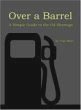 |
Over a Barrel: A Simple Guide to the Oil Shortage
Over a Barrel provides a balanced and factual picture of the medium-to-long range role of oil in supplying the world's energy needs, as well as an understanding of the many technical and social implications of the alternatives to oil. Suggestions are given for actions the reader can take to support R&D efforts and fuel conservation to extend the time we have to accomplish the identification and building of industries for alternatives to oil. (by Tom Mast)
|
| |
| |
 |
The End of Oil (by Paul Roberts)
Petroleum is now so deeply entrenched in our economy, our politics, and our personal expectations that even modest efforts to phase it out are fought tooth and nail by companies and governments that depend on oil revenues, by developing nations that see oil as the only means to industrial success, and by a Western middle class that refuses to modify its energy-dependent lifestyle. How to break our addiction to oil? Answers within...
|
| |
| |
 |
Out of Gas: The End of the Age of Oil (by David Goodstein)
This book explains the underlying scientific principles of the inevitable fossil fuel shortage we face. He outlines the drastic effects a fossil fuel shortage will bring down on us, and he shows that there is an another important reason to switch to other sources of energy: If we insist on burning up all of the available oil, the earth's climate will have moved toward a truly life-threatening state.
|
| |
| |
 |
The Oil Factor (by Stephen and Donna Leeb)
How Oil Controls the Economy and Your Financial Future
We need to worry about our energy future, but we also need to worry about our financial futures. This book combines the two notions, offering general investment advice based on the authors' analysis that an oil crisis is coming and that it will mean trouble for many stocks.
|
| |
| |
 |
The Carbon War
Global Warming and the End of the Oil Era
Written by a former petroleum geologist; explains global warming and its impacts; recounts efforts by the fossil-fuel industries to stall and dilute government action on climate change. (by Jeremy K. Leggett, Jan-2001)
|
| |
Done with books for a while?
Try our cartoons or articles . . .
|
|
|
|
|
Hey, we don't pick
the Google ads! – GP
|
| |
| CLICKS ON OUR ADS AND PURCHASES VIA OUR AMAZON LINKS HELP SUPPORT THIS FREE SITE... THANKS! |
|
|

View on Amazon.com:
Big Berkey
(water filter)
|
|
View on Amazon.com:
Solar Gardening
Growing Vegetables
Year-Round the American Intensive Way — A system for continuous food production.
|
INFO-AD

|
|