| |
ENVIRONMENTAL BOOKS / HEALTH BOOKS
The following separate book pages are now available:
For all other categories, see the environmental books / health books list below.
For more reviews, to see sample pages, or to get purchase info, click on any title to go to Amazon.com
| |
 |
The Organic Lawn Care Manual (by Paul Tukey)
A Natural, Low-Maintenance System for a Beautiful, Safe Lawn
In recent years, more and more lawns are evolving into organic systems as homeowners—concerned about the long-term effects of chemicals on their children, their pets, and the environment—turn to natural methods to keep their yards healthy and inviting, and, yes, still green and lush, too. Paul Tukey, a self-confessed mowing addict, answers the growing demand for organic grass with a comprehensive volume of natural lawncare information. Step by step, he takes readers through the many elements that work together to form a healthy, organic lawn.
|
| |
| |
 |
Poisoned for Profit (by Philip Shabecoff, Alice Shabecoff)
How Toxins Are Making Our Children Chronically Ill
Ubiquitous exposures to toxins are contributing to increasing rates of birth defects, asthma, cancer, and other serious illnesses, especially among children. The onslaught comes from manufacturing processes, power generation, nuclear waste, heavy metals, even consumer products. Why do we let corporations weasel their way around regulations, sabotage investigations, hire scientists to skew data on toxic impacts, and fend off government controls with powerful lobbying groups? It's time for families to fight back by ridding their homes of toxic products and through citizen action. Poisoned for Profit shows how.
|
| |
| |
 |
Slow Death by Rubber Duck (by Rick Smith, Bruce Lourie)
How the Toxic Chemistry of Everyday Life Affects Our Health
Pollution is no longer just about belching smokestacks and ugly sewer pipes—now, it's personal. The most dangerous pollution, it turns out, comes from commonplace items in our homes and workplaces. To prove this point, for one week authors Rick Smith and Bruce Lourie ingested and inhaled a host of things that surround all of us. Using their own bodies as the reference point to tell the story of pollution in our modern world, they expose the miscreant corporate giants who manufacture the toxins, the weak-kneed government officials who let it happen, and the effects on people and families across the globe.
|
| |
| |
 |
Animal Factory The Looming Threat of Industrial Pig, Dairy, and Poultry Farms to Humans and the Environment (by David Kirby)
Our highly industrialized "factory farms" raise food animals in a way that "externalizes" many of the costs of production---that is, the costs are quietly passed on to consumers, taxpayers, and surrounding communities. Examples include: streams and public water supplies contaminated with manure waste; neighborhoods ruined by the smell of hog-waste lagoons; food recalls and flu outbreaks caused by farm pathogens; "dead zones" in our coastal waters, some the size of entire states. Animal Factory follows three American families in different regions of the US whose lives have been utterly changed by Concentrated Animal Feeding Operations, a.k.a. CAFOs. Weaving science, politics, business, and the lives of everyday people, David Kirby documents a crisis that has reached a critical juncture in the history of human health, animal welfare, and our environment.
|
| |
| |
 |
Food Rules: An Eater's Manual (by Michael Pollan)
Simple and sensible, Food Rules proposes a set of easy-to-remember principles for eating wisely, whether at the supermarket or an all-you-can-eat-buffet. In a world full of confusing claims about the plethora of industrial food offerings, this pocket-sized guide is perfect for anyone who would like to become more mindful of the food they eat.
|
| |
| |
 |
The Unhealthy Truth (by Robyn O'Brien)
How Our Food Is Making Us Sick---And What We Can Do About It
Robyn O'Brien, an MBA mother of four, did not give much thought to issues like chemicals in food, until the day her youngest daughter had a violent allergic reaction to eggs. Then everything changed. In reviewing research conducted in Europe, O'Brien traced the relationship between Big Food and Big Money in the United States, a relationship that results in hidden toxins in our food---chemicals that can be blamed for the alarming increases in allergies, ADHD, cancer, and asthma among our children. The Unhealthy Truth is the story of how O'Brien chose to take on the system, and it's a call to action that shows how each of us can do our part and keep our own families safe. (by Robyn O'Brien)
|
| |
| |
 |
Food, Inc. A Participant Guide: How Industrial Food is Making Us Sicker, Fatter, and Poorer---And What You Can Do About It (Karl Weber, editor)
Through a series of essays by leading experts and thinkers, this book answers questions such as ... Where does my food come from and how is it processed? What stake do giant agribusinesses have in maintaining the status quo of food production and consumption? How can I feed my family healthy foods affordably? The companion to the powerful documentary Food, Inc., this book adds depth to the discussion of the issues.
|
| |
| |
 |
Eating Animals (by Jonathan Safran Foer)
Jonathan Safran Foer spent much of his teenage and college years oscillating between omnivore and vegetarian. But on the brink of fatherhood---facing the prospect of having to make dietary choices on a child's behalf---his casual questioning took on urgency. His quest for answers ultimately required him to visit factory farms in the middle of the night, dissect the emotional ingredients of meals from his childhood, and probe some of his most primal instincts about right and wrong. Eating Animals explores the many fictions we use to justify our eating habits.
|
| |
| |
 |
Pasture Perfect The Far-Reaching Benefits of Choosing Meat, Eggs, and Dairy Products from Grass-Fed Animals (by Jo Robinson)
Pasture Perfect uses scientific evidence to explain how products from grass-fed animals are safer and more nutritious than conventional ones. The animals live low-stress, more natural lives, and their meat is higher in Vitamin E, beta-carotene, and omega-3 fatty acids. Eggs and dairy have similar benefits. The book also helps you locate pasture-raised products.
|
| |
| |
 |
This Borrowed Earth (by Robert Emmet Herna)
Lessons from the Fifteen Worst Environmental Disasters around the World
Over the last century mankind has irrevocably damaged the environment through the unscrupulous greed of big business and our own willful ignorance. Here are the strikingly poignant accounts of disasters whose names live in infamy: Chernobyl, Bhopal, Exxon Valdez, Three Mile Island, Love Canal, Minamata, and others. And with these, the extraordinary and inspirational stories of the countless men and women who fought bravely to protect the communities and environments at risk.
|
| |
| |
 |
Plan B 4.0 (by Lester R. Brown)
Mobilizing to Save Civilization (Substantially Revised)
As fossil fuel prices rise, oil insecurity deepens, and concerns about climate change cast a shadow over the future of coal, a new energy economy is emerging. Wind, solar, and geothermal energy are replacing oil, coal, and natural gas, at a pace and on a scale we could not have imagined even a year ago. For the first time since the Industrial Revolution, we have begun investing in energy sources that can last forever. Plan B 4.0 explores the nature of this transition to a new energy economy and how it will affect our daily lives.
|
| |
| |
 |
The Upside of Down (by Thomas Homer-Dixon)
Catastrophe, Creativity, and the Renewal of Civilization
Peak oil is upon us, we have ever-worsening environmental degradation, and we face a deepening global financial crisis. We at GP also feel frustration at the seeming impossibility of solving our problems within the iron envelope of today's reigning free-market plutocracy. Thus it should be no surprise that we were pleased to see a book explained how reframe this troubled situation and strategize to take advantage of any coming chaos. The book's title is The Upside of Down---Catastrophe, Creativity, and the Renewal of Civilization, by Thomas Homer-Dixon.
Read full review of The Upside of Down
|
| |
| |
 |
Easy Green Living (by Renee Loux)
The Ultimate Guide to Simple, Eco-Friendly Choices for You and Your Home
We are what we eat, but we also are what we use to clean our homes, pamper our skin, and decorate our rooms. Being green at home is easy, affordable, and better in every sense of the word. This complete lifestyle guide includes green tips on cosmetics, personal-care products, cleaning, laundry, kitchen operations, bedrooms, furnishings, and lighting.
|
| |
| |
 |
Green Remodeling (by John D. Wagner)
Your Start toward an Eco-Friendly Home
The Ultimate Guide to Green Remodeling shows homeowners how they can take part in the green-home revolution through remodeling using green, nontoxic building materials and techniques. Topics covered include reducing home energy use, selecting nontoxic products, saving water, and supporting a clean environment through the use of products that employ responsible manufacturing techniques and the sustainable harvesting of natural resources.
|
| |
| |
 |
Ecoholic Your Guide to the Most Environmentally Friendly Information, Products, and Services (by Adria Vasil)
Ecoholic is your guide to separating the green from the greenwashed. It names names and gives you the dirt on what not to buy, and why. It's filled with tips on everything from which seafood is safe to eat to greener choices for clothes, beauty products, and home supplies to getting the hormone disruptors out of your kids, your carpets, and even your love life. Veteran planet-saver David Suzuki says, "This book is for people who want to do something to lighten their impact on the planet."
|
| |
| |
 |
The Complete Idiot's Guide to Green Cleaning
Non-Toxic and Chemical-Free Methods for a Clean and Healthy Home, 2nd Edition (by Mary Findley, Linda Formichelli)
This book focuses on cleaning the green way—naturally, with no chemicals. It guides you room-by- room, explaining how to clean thoroughly and efficiently in manner that is good for your health and your world. Included are tips on choosing cleaners, cleaning difficult areas, changing to green personal-care products, and more. Become a green cleaning machine!
|
| |
| |
 |
Healthy Child Healthy World (by Christopher Gavigan)
Creating a Cleaner, Greener, Safer Home
All parents want a healthy, environmentally sound home for their child, but where do they start? This book has practical, inexpensive, and easy lifestyle advice for every stage of parenting including: advice for parents who are expecting; info on which plastics and baby products to avoid; tips on food and snack choices; info on safe and unsafe cleaning and personal-care products; ways to minimize allergens, dust, and lead; thoughts on outdoor spaces; tips on pets and pest control. Also included is a 27-page shopper's guide to the best quality, most trusted products every home needs.
|
| |
| |
 |
Paper or Plastic (by Daniel Imhoff)
Searching for Solutions to an Overpackaged World
Western consumer society is on a collision course with the planet's life-support systems. Do we clearcut forests, process pulp, and bleach it with chlorine to make paper bags? Or do we make a pact with the hydrocarbon demon, refining ancient sunlight into handy plastics? About half the total volume of America's municipal solid waste is packaging—at least 300 pounds per person each year—and the "upstream" costs in energy and resources used to make packaging are even more alarming. In this fascinating look at the world of packaging, writer Daniel Imhoff and photographer/designer Roberto Carra give consumers, product designers, and policymakers the information we need to take steps toward a more sustainable future.
|
| |
| |
 |
Exposed
The Toxic Chemistry of Everyday Products (by Mark Schapiro)
The European Union has adopted strict standards for products sold there. Thanks to lobbying efforts by the US chemical industry, products developed and sold in the United States are increasingly equated with serious health hazards, and many of those products are soon to be banned from Europe and other parts of the world. Schapiro's revelations in this thought-provoking work will change the way American consumers think about everyday products—from plastic chemicals that can contribute to sexual malformations to lipstick additives that are potential toxins to the brain, liver, kidneys, and immune system.
|
| |
| |
 |
Cell Phones and The Dark Deception (by Carleigh Cooper)
Find Out What You're Not Being Told...And Why
Cell Phones and The Dark Deception scrutinizes the evidence to resolve a question that has been lingering since 1993: Are cell phones safe? The book probes the evidence, industry cover-ups, and government secrets to answer the question definitively. Find out what you're not being told...and why. The book also discusses ways to reduce your exposure and risk without giving up your cell phone.
|
| |
| |
 |
Diagnosis: Mercury
Money, Politics, and Poison (by Jane M. Hightower)
Mercury, a toxic element that has been plaguing us for centuries, is now showing up in fish. While mercury is a naturally occurring element, there's much that is unnatural about this poison's prevalence in modern-day seafood. Diagnosis: Mercury traces the prevalence of mercury poisoning, revealing how dubious studies, political calculations, and industry lobbyists have combined to endanger our health.
|
| |
| |
 |
Enough: Staying Human in an Engineered Age
(by Bill McKibben)
As we enter the age of commonplace plastic surgery, genetic research, reproductive manipulation, nanotechnology, robotics, and the myriad technological wonders we can apply to ourselves and the world around us, McKibben explores the basic question of what it means to be human. When do we reach to point of "enough already!"...?
|
| |
| |
 |
Bottomfeeder (by Taras Grescoe)
How to Eat Ethically in a World of Vanishing Seafood
Dividing his sensibilities between Epicureanism and ethics, Taras Grescoe set out on a nine-month, worldwide search for a delicious—and humane—plate of seafood. What he discovered shocked him. From North American Red Lobsters to fish farms and research centers in China, Bottomfeeder takes readers on an illuminating tour through the $55-billion-dollar-a-year seafood industry. Grescoe examines how out-of-control pollution, unregulated fishing practices, and climate change affect what ends up on our plate. More than a screed against a multibillion-dollar industry, however, this is also a balanced and practical guide to eating, as Grescoe explains to readers which fish are best for our environment, our seas, and our bodies.
|
| |
| |
 |
Sacred Sea: A Journey to Lake Baikal (by Peter Thomson)
Veteran environmental journalist Peter Thomson set off from Boston with his younger brother for one of nature's most remarkable creations—Lake Baikal. The world's largest, deepest, and oldest freshwater lake, Lake Baikal is a cauldron of evolution, home to hundreds of unique creatures. A trip halfway around the world by train brings the brothers to a place of sublime beauty, deep history, and immense natural power. But at Baikal they also find ominous signs that this perfect piece of nature could yet succumb to the even more powerful forces of human hubris—carelessness and ignorance. What begins as a search for restoration in nature becomes as well a discovery of the restorative power of trust, faith and human connection.
|
| |
| |
 |
The End of the Line (by Charles Clover)
How Overfishing Is Changing the World and What We Eat
Ninety percent of the large fish in the world's oceans have disappeared in the past half century, causing the collapse of fisheries along with numerous fish species. In this hard-hitting, provocative exposé, Charles Clover reveals the dark underbelly and hidden costs of putting food on the table at home and in restaurants. From the Tsukiji fish market in Tokyo to a seafood restaurant on the North Sea and a trawler off the coast of Spain, Clover pursues the sobering truth about the plight of fish. Along with the ecological impact wrought by industrial fishing, he reports on the implications for our diet, particularly our need for omega-3 fatty acids. This intelligent, readable, and balanced account serves as a timely warning to the general public as well as to scientists, regulators, legislators, and fishing enthusiasts.
|
| |
| |
 |
Raising Baby Green (by Alan Greene, M.D.)
The Earth-Friendly Guide to Pregnancy, Childbirth, and Baby Care
In this illustrated and easy-to-use guide, pediatrician Dr. Alan Greene, a leading voice of the green baby movement, advises parents how to make healthy green choices for pregnancy, childbirth, and baby care---from feeding your baby the best food available to using medicines wisely. Consumer advocate Jeanette Pavini includes information for making smart choices and applying green principles to a whole new universe of products from zero-VOC paints for the nursery, to pure and gentle lotions for baby’s delicate skin, to the eco-friendly diapers now in the marketplace, as well as specific recommendations for hundreds of other products.
|
| |
| |
 |
What Would Jesus Buy? (by Reverend Billy)
Fabulous Prayers in the Face of the Shopocalypse
Reverend Billy believes big-box brainless consumerism is destroying our culture and our planet. What Would Jesus Buy? is an inspiring love-a-lujah! compendium of the reverend in full flow, including exhortations from the pulpit, public prayer-protests against consumerism, even oddities such as reflections on why lesbian marriage will save the Spotted Owl. WWJB will entertain, convince, convert, and give readers actions they can take to become affiliated with the Church of Stop Shopping.
|
| |
| |
 |
Deep Economy (by Bill McKibben)
The Wealth of Communities and the Durable Future
Bill McKibben observes that the first time in human history, more is no longer synonymous with better. Our purchases, he says, need not be at odds with the things we truly value—but we must gravitate towards new ways of thinking about the things we buy, the food we eat, the energy we use, and the money that pays for it all. We must move beyond growth as the paramount economic ideal and pursue prosperity more locally. Deep Economy offers a realistic, if challenging, scenario for a hopeful future.
|
| |
| |
 |
The Economics of Climate Change The Stern Review
There is now clear scientific evidence that emissions from economic activity, particularly the burning of fossil fuels for energy, are causing changes to the earth's climate. A sound understanding of the economics of climate change is needed in order to underpin an effective global response to this challenge. The Stern Review—conducted by Sir Nicholas Stern, head of the UK Government Economic Service and a former Chief Economist at the World Bank—is an independent, rigorous, and comprehensive analysis of the economic aspects of this crucial issue.
|
| |
| |
 |
The Perverse Economy (by Michael Perelman)
The Impact of Markets on People and the Environment
From Adam Smith to the present day, economic theory has shortchanged the workers most crucial to the functioning of human life and offered skewed views of scarcity and extraction. Perelman shows how this approach has produced a discipline in which its followers' models and representations of the world around them are so removed from reality that continuing to abide by them will jeopardize both nature and humanity.
|
| |
| |
 |
The Worst Hard Time (by Timothy Egan)
The Untold Story of Those Who Survived the Great American Dust Bowl
The dust storms that terrorized the High Plains in the darkest years of the Depression were like nothing ever seen before or since. Timothy Egan's critically acclaimed account follows a dozen families and their communities through the rise and fall of the region, telling of their desperate attempts to carry on through blinding black dust blizzards, crop failures, and the death of loved ones.
|
| |
| |
 |
The Omnivore's Dilemma
A Natural History of Four Meals (by Michael Pollan)
Michael Pollan asks the seemingly simple question: What should we have for dinner? Tracing from source to table each of the food chains that sustain us—whether industrial or organic, alternative or processed—he develops a portrait of the American way of eating. The result is a sweeping, surprising exploration of the hungers that have shaped our evolution, and of the profound implications our food choices have for the health of our species and the future of our planet.
|
| |
| |
 |
Fast Food Nation
The Dark Side of the All-American Meal (by Eric Schlosser)
Fast food has hastened the "malling" of our landscape, widened the chasm between rich and poor, fueled an epidemic of obesity, and propelled American cultural imperialism abroad. Fast Food Nation tears into the juicy underbelly of the greasy beast, unearthing a trove of fascinating, unsettling truths—from the unholy alliance between fast food and Hollywood to the seismic changes the industry has wrought in food production, popular culture, and even real estate.
Also available: Fast Food Nation movie
|
| |
| |
 |
The Last Forest The Amazon in the Age of Globalization
With a landmass larger than the continental US west of the Mississippi and with the richest diversity of plant and animal species on earth, the Amazon has always struck its explorers and would-be exploiters as infinite and largely impenetrable. But today, as developers and environmentalists clash over the region's future, the seemingly endless forest is fast disappearing in fires, rampant mineral extraction, rogue logging operations, and encroaching urban sprawl. As The Last Forest chronicles the region's transformation, we're stuck with the fundamental question: Is it too late to strike a balance in the Amazon between economic sustenance for the twenty-one million Brazilians who live there and protection for the world's last great forest? (by Mark London, Brian Kelly)
|
| |
| |
 |
The Smithsonian Atlas of the Amazon
This illustrated atlas of the Amazon River and the surrounding rain forest presents full-color maps and nearly 300 spectacular photos. Along the way, the authors explore many intriguing topics such as why some of the Amazon's tributaries have black water, what happens when the freshwater of the Amazon reaches the salty ocean, and why we all should be concerned about the deforestation that contributes to the loss of species biodiversity. (by Goulding, Barthem, Ferreira)
|
| |
| |
 |
Rain Forest (a DK 24 Hours book)
Around the Clock With the Animals of the Jungle
Ages 9-12. This beautifully illustrated guide invites reader to spend a day with the animals and plants that inhabit one of the world's most fascinating environments—the rain forest.
|
| |
| |
 |
Manifestos on the Future of Food and Seed
Manifestos on the Future of Food and Seed is a collection of essays that goes to the heart of our existence—what we eat and how we grow it. We live in a world with 80,000 edible plants, but only about 150 are cultivated; a world of agricultural abundance and rampant obesity, yet 800 million still suffer from malnutrition; a world where food is modified to travel long distances rather than to be nutritious and flavorful. Manifestos offers prescriptions to reverse perhaps the worst food crisis faced in human history. (edited by Vandana Shiva)
|
| |
| |
 |
What to Eat (by Dr. Luise Light)
The Ten Things You Really Need to Know to Eat Well and Be Healthy
If you're a health-conscious consumer, one of the hardest questions you face is "What should I eat?" Former USDA nutrition director Luise Light answers with this basic, balanced, and user-friendly food plan that cuts through the confusion and controversy of the latest fad diets, federal guidelines, and agribusiness propaganda. Its ten simple rules are also adapted for a wide variety of nutritional needs—including weight loss, fibromyalgia, diabetes, and gastrointestinal disorders.
|
| |
| |
 |
The Organic Food Guide How to Shop Smarter and Eat Healthier
Trying the eat healthy these days can be downright confusing. This book steers you to healthier foods, shows you how to find the bargains, and provides answers to questions like: Is there a difference between "organic" and "all natural"? Are organic foods really healthier and safer? Do they contain more vitamins and minerals? Can pesticides cause cancer?
(by Steve Meyerowitz)
|
| |
| |
 |
50 Ways to Save the Ocean (by David Helvarg)
This book focuses on practical, easily implemented actions everyone can take to protect our oceans. Topics include: stopping runoff pollution; fighting off-shore oil rigs; valuing wetlands and marine sanctuaries; protecting local water tables; proper diving, surfing, and tide pool etiquette; supporting local marine education; how and where to vacation; what fish should and should not be eaten. The oceans are in trouble—you can help.
|
| |
| |
 |
When the Rivers Run Dry (by Fred Pearce)
Water—The Defining Crisis of the Twenty-first Century
In this book, veteran science correspondent Fred Pearce travels to more than thirty countries to examine the current state of crucial water sources. Weaving together the complicated scientific, economic, and historic dimensions of the emerging world water crisis, he provides the most complete portrait yet of this growing danger and its ramifications for us all.
|
| |
| |
 |
An Unreasonable Woman A True Story of Shrimpers, Politicos, Polluters, and the Fight for Seadrift, Texas (by Diane Wilson)
When Diane Wilson, a fourth-generation shrimp-boat captain and mother of five, learned that she lived in the most polluted county in the United States, she launched a campaign against a multi-billion-dollar corporation that has been covering up spills, silencing workers, flouting the EPA, and dumping lethal ethylene dichloride and vinyl chloride into the bays along her beloved Texas Gulf Coast. Find out how she braved scorn, bribery attempts, character assassination, and even death threats to finally win.
|
| |
| |
 |
The Secret History of the War on Cancer (by Devra Davis)
The War on Cancer set out to find, treat, and cure a disease. Left untouched were many of the things known to cause cancer, including radiation and chemicals. Proof of how the world in which we live and work affects whether we get cancer was either overlooked or suppressed. This has been no accident—the War on Cancer was hijacked by leaders of industries that made make cancer-causing products, companies that sometimes also profit from drugs and technologies used to find and treat the disease. The Secret History of the War on Cancer shows how we began fighting the wrong war, with the wrong weapons, against the wrong enemies—a legacy that persists to this day.
|
| |
| |
 |
Fresh Air for Life (by Allan C. Somersall)
How to Win Your Unseen War Against Indoor Air Pollution
The US EPA ranks indoor air pollution among the top five most significant environmental dangers to the public. Their research concludes that indoor air is usually 2-10 times more polluted than outside air—and sometimes far worse than that. Citing scientific evidence but writing in layman's terms, Dr. Somersall takes you through the concerns, consequences, and solutions to indoor air pollution.
|
| |
| |
 |
Home Safe Home (by Debra Lynn Dadd)
The level of chemical exposure we experience just by using legal household and personal products—the cleaners, laundry soaps, fabric softeners, deodorants, and shampoos that are so ubiquitously displayed on the shelves at supermarkets and drug stores—is astonishing. This book will help you work you way out of the toxic soup.
|
| |
| |
 |
The Body Toxic How the Hazardous Chemistry of Everyday Things Threatens Our Health and Well-Being (by Nena Baker)
Everyone everywhere now carries a dizzying array of chemical contaminants, the by-products of modern industry and innovation that contribute to a host of developmental deficits and health problems in ways just now being understood. These toxic substances, unknown to our grandparents, accumulate in our fat, bones, blood, and organs as a consequence of womb-to-tomb exposure to industrial substances as common as the products that contain them. Investigative journalist Nena Baker explores the many factors that have given rise to this condition—from manufacturing breakthroughs to policy decisions to political pressure to the demands of popular culture.
|
| |
| |
 |
Hostile Takeover How Big Money and Corruption Conquered Our Government—and How We Take It Back (by David Sirota)
Millions of Americans overpay for inadequate health care and work for wages that have been stagnant for thirty years, even as corporate profits have skyrocketed. Jobs have been shipped overseas, pensions have been cut, clean-air and clean-water laws have been weakened or ignored, and energy is becoming unaffordable. David Sirota shows how corporate interests and our so-called "elected representatives" are causing these problems and undermining our democracy. He also lays out a plan for those of us determined to take our country back.
|
| |
| |
 |
Planetary Citizenship (by Hazel Henderson, Daisaku Ikeda)
Your Values, Beliefs and Actions Can Shape A Sustainable World
This book explores a wide variety of issues, including: sustainable development; economic justice; respect for indigenous peoples and their traditional lands and resources; democratization of international institutions; corporate accountability; and conserving the Earth's biodiversity, water, air quality, and climate. The authors present a practical yet profound optimism in human potential and our ability to build a brighter future.
|
| |
| |
 |
Green to Gold How Smart Companies Use Environmental Strategy to Innovate, Create Value, and Build Competitive Advantage (Esty, Winston)
Based on the authors' years of experience and hundreds of interviews with corporate leaders around the world, Green to Gold shows how building environmental thinking into companies' business strategies generates lasting value, cuts costs, reduces risk, increases revenues, and creates strong brands. The authors not only highlight successful strategies but also make plain what does not work by describing why environmental initiatives sometimes fail despite the best intentions.
|
| |
| |
 |
The Essence of Chocolate (by Scharffenberger & Steinberg)
Recipes for Baking and Cooking with Fine Chocolate
The Essence of Chocolate features more than 100 spectacular—and often simple—recipes drawn from top pastry chefs. Arranged by chocolate intensity, the book is filled with helpful tips, sumptuous photographs, and the story of how chocolate is really made. Top picks include That Chocolate Cake, Chocolate Pudding Cakes, Chocolate-Chocolate Cupcakes, and Chocolate Mousse. Yum!
|
| |
| |
 |
Chocolate: A Bittersweet Saga of Dark and Light
It turns out that science says chocolate is actually good for you—it's packed with antioxidants and triggers important brain chemicals. Delve into the complex world of chocolate—from the chocolates of ancient Mexico to those of contemporary France to the dark side of the chocolate trade to the factories of Hershey and Godiva. This book melts in your mind, not in your hand! (by Mort Rosenblum)
|
| |
| |
 |
Chocolate Obsession (by Michael Recchiuti, Fran Gage)
Confections and Treats to Create and Savor
In Chocolate Obsession, Michael Recchiuti, owner of a famous artisanal chocolate company in San Francisco, divulges his professional secrets and techniques, allowing home cooks to reproduce his exquisite confections in their own kitchens. The book includes a discussion of chocolate, from bean to bar; detailed instructions for delights like dipped chocolates, truffles, and molded chocolates; with over 60 recipes in all.
|
| |
| |
 |
Clean Water An Introduction to Water Quality and Pollution Control
Clean Water is a book for anyone concerned about this precious resource who wants to become better informed. In straightforward language, Kenneth Vigil provides a comprehensive introduction to the many scientific, regulatory, cultural, and geographic issues associated with water quality and water pollution control. (by Kenneth M. Vigil)
|
| |
| |
 |
Water Pollution (True Books series)
For ages 4-8. Covers the basics of water pollution in a kid-friendly format. Topics include the types of water pollution, including dumping, fertilizer, and pesticides; effects of water pollution; solutions to water pollution; and ways that kids can get more info on the topic. (by Rhonda Lucas Donald)
|
| |
| |
 |
Water Wars: Privatization, Pollution, and Profit
Do we all have a right to plentiful, low-cost fresh water? With population and usage growing and water being used at unsustainable rates, some corporations see water as a potential source of profits. The author provides ideas on how we can avoid a water-poor future.
(by Vandana Shiva)
|
| |
| |
 |
Nobody Particular (by Molly Bang)
One Woman's Fight to Save the Bays
Diane Wilson lived a fairly ordinary life until she learned that she lived in one of the most polluted counties in the US. She launched a campaign against an international chemical company, determined to protect the Texas bays on which she, her father, and her grandfather had made their living. Graphic-novel format; for younger readers.
|
| |
| |
 |
In Amazonia: A Natural History (by Hugh Raffles)
The cast of characters in this rich, engaging book includes explorers from the 1500s; naturalists and ecologists from the last 200 years; logging companies; and the industrious, river-altering inhabitants of a remote jungle village. Raffles provides the history, science, and politics of the Amazon, presenting the majestic region as a tapestry that has been in a constant state of re-weaving for a long time.
|
| |
| |
 |
Remarkable Trees of the World (by Thomas Pakenham)
Thomas Pakenham loves trees, and this book is a labor of love. In it you will find photographs of 60 of the planet's most majestic, ancient, huge, and downright interesting trees, as well as a fascinating narrative to walk you through the tree-lined tour.
|
| |
| |
 |
The People's Forests (by Robert Marshall)
Who owns America's forests? Lumber companies? Tree huggers? The government? Robert Marshall, a prominent thinker and administrator of forest policy in the 1920s and 1930s—and a clear foe of forest exploitation—thought the forests belonged to all citizens of the US and that they should be administered accordingly.
|
| |
| |
 |
Collapse
How Societies Choose to Fail or Succeed (by Jared Diamond)
What caused some of the great civilizations of the past to collapse into ruin? Moving from the Polynesian cultures on Easter Island to the flourishing American civilizations of the Anasazi and the Maya, and finally to the doomed Viking colony on Greenland, Diamond traces the fundamental pattern of catastrophe. How can our modern civilization avoid the same fate?
|
| |
| |
 |
Limits to Growth: The 30-Year Update
Based on analyses by MIT scientists (the authors), this book discusses the limits to the planet's carrying capacity, i.e. how many of us humans the planet can sustain. They see trouble ahead, with the major factors being population growth and global warming. They discuss resource trends and strategies, assess a variety of possible outcomes, and offer hope that humanity can reverse course. (by Meadows, Randers, Meadows)
|
| |
| |
 |
One With Nineveh Politics, Consumption, and the Human Future
Is our cherished Western civilization doomed to go the way of Mesopotamia and other civilizations that perished because of unexpected environmental shifts or their own arrogance, greed, and ignorance of perilous circumstances? Quite possibly. The authors cover the political, media, and social causes of the problem, and conclude that there is hope—see solutions within... (by Paul Ehrlich and Anne Ehrlich)
|
| |
| |
 |
Organic, Inc. Natural Foods and How They Grew
What is organic food? Is it really better for you? Where did it come from, and why are so many of us buying it? Business writer Samuel Fromartz traces organic food back to its anti-industrial origins more than a century ago; then he follows it forward again, spotlighting the successes and examining how the industry now risks betraying the very ideals that drove its success. (by Samuel Fromartz)
|
| |
| |
 |
Diet for a Dead Planet How the Food Industry Is Killing Us
Corporate consolidation of farms and supermarkets, the drive to increase productivity, misplaced subsidies for exports, and inadequate regulation have all combined to produce a grim harvest. According to the Centers for Disease Control, more than 75 million Americans fell sick last year from the food they ate. Cook argues that there are better ways, including organic food, farmers' markets, and food cooperatives. (by Christopher D. Cook)
|
| |
| |
 |
Your Organic Kitchen (by Jesse Ziff Cool)
The Essential Guide to Selecting and Cooking Organic Foods
Nationally known chef Jesse Ziff Cool first explains why you should choose organic, how to stock your organic pantry, and how to make the most of seasonally changing produce. Then she offers up 160 of her favorite recipes, culled from her 25 years in the restaurant business. Monge! Enjoy!
|
| |
| |
 |
Garbage Land On the Secret Trail of Trash
By melding science, anthropology, and a strong dose of clear-headed analysis, Garbage Land lifts the lid off the little-though-of world of trash and reveals its surprisingly complicated underbelly. The investigation shows us what really happens to the things we dispose of, reminding us that our decisions about consumption and waste have a very real impact—and that, like it or not, the garbage we create will always be with us. (by Elizabeth Royte)
|
| |
| |
 |
The Better World Handbook
From Good Intentions to Everyday Actions (by Jones, Haenfler, et al)
It would be a perfect world if everyone could quit their jobs and devote themselves fully to the causes they believed in—but they can't. The Better World Handbook shows caring, busy people how to live according to their progressive values but still "have a life." Areas covered include planet-friendly ways to shop, eat, bank, invest, drive, get news, and more.
|
| |
| |
 |
LifePlace: Bioregional Thought and Practice
Robert Thayer brings the concepts and promises of the growing bioregional movement to a wide audience in a book that passionately urges us to discover "where we are" as an antidote to our rootless, stressful modern lives. LifePlace is a provocative meditation on bioregionalism and what it means to live, work, eat, and play in relation to a naturally defined area rather than a politically defined area. (by Robert L. Thayer Jr.)
|
| |
| |
 |
Home Enlightenment Practical, Earth-Friendly Advice for Creating a Nurturing, Healthy, and Toxin-Free Home and Lifestyle (by Annie Bond)
REVIEW: Home Enlightenment is a smorgasbord for the senses. Annie Bond's experiences, quotes, references and advice are as soothing and warm as a nice cup of java on a crisp, clear chemical-free morning. This book is an encyclopedia of information on everything from air quality in the home to Yak fibers. The little fluorescent bulb will light over your head repeatedly as each chapter gives you practical advice for healthier living with the elements. Home Enlightenment is not just about the home; it's about treading lightly on this earth while treating yourself well, too. It's organic soup for the soul.
|
| |
| |
 |
Animal Rights: Current Debates And New Directions
Farm animals cannot easily be distinguished from dogs and cats in terms of intelligence and behavior. This and other uses of animals by human beings has forced uncomfortable questions to center stage: Should people change their behavior? Should the law promote animal welfare? Should animals have legal rights? Should animals continue to be counted as 'property'? What reforms make sense? An all-star cast of contributors explores the legal and political issues that underlie the campaign for animal rights and the opposition to it. (by Sunstein & Nussbaum (editors))
|
| |
| |
 |
Lethal Laws (by Alix Fano)
Animal Testing, Human Health and Environmental Policy
This book argues that using animals as human surrogates is not only unethical, but bad science; it shows how animal testing has been used as an alibi for the continued use of supposedly "safe" chemicals; and it shatters the myth that animal tests are accurate predictors of human health risks.
|
| |
| |
 |
Making Kind Choices Everyday Ways to Enhance Your Life Through Earth- and Animal-Friendly Living (by Ingrid Newkirk)
This is a practical and accessible handbook that will not only enhance your life, but those of your neighbors, your community, animals, and the earth itself. It covers everything eco- and animal-friendly, from comfortable home furnishings to safe lawn and garden care to tasty meals to fashionable clothing. There are myriad choices to be made that can have a lasting positive effect on the well-being of animals and the environment—here is your guide on how to do it.
|
| |
| |
 |
The Beast That Ate the Earth
The Environment Cartoons of Chris Madden
A book of humorous and thought-provoking cartoons tackling the major environmental issues affecting the twenty-first century.
"If a picture is worth a thousand words, then these cartoons are rich and insightful dissertations...unique..."
— Environmental Scientist, Institute of Environmental Scientists
|
| |
| |
 |
Cartoon Guide to the Environment (by Larry Gonick)
Who ever said you have to read stuffy old books to learn about the environment? This toony treatment of current environmental problems covers basics like chemical cycles and food webs, mid-level concepts such as ecosystems, and tricky topics like population growth and its impact on the planet.
|
| |
| |
 |
America (The Book): A Citizen's Guide to Democracy Inaction
American-style democracy is the world's most beloved form of government, which explains why so many other nations are eager for us to impose it on them. In "America (The Book)," Jon Stewart and company serve up humor-seasoned insights into our unique system of government, dissecting its institutions, explaining its history and processes, and exploring its myths.
(by Jon Stewart and the writers of "The Daily Show")
|
| |
| |
 |
The Stupidest Things Ever Said by Politicians
It's not a partisan thing, folks—both sides say wonderfully stupid things, such as Al Gore's "A zebra cannot change its spots" and Bob Dole's "I will not tolerate intolerance." This book is a Verbal Hall of Shame that features the idiotic utterances, ridiculous slogans, mixed metaphors, and lame excuses that have fallen from the mouths of our fearless leaders, past and present (because stupid knows no age). (by Kathryn and Ross Petras)
|
| |
| |
 |
The Sacred Balance (text) (by David Suzuki, Amanda McConnell)
Rediscovering Our Place in Nature
"Consume and compete!" — the message of the economic treadmill is loud and constant. But the real bottom line is not debts and deficits, but rather the physical, social, and spiritual needs that form the basis of any society that aspires to a sustainable future and a high quality life for its citizens. Those fundamentals are rooted in the earth and its life support systems.
|
| |
| |
 |
The Sacred Balance (photos) (by Suzuki, McConnell, Decambra)
A Visual Celebration of Our Place in Nature
This stunning collection of images explores the interconnectedness of all life. It's a visual feast that celebrates the sacred balance of life through spectacular photographs, beautiful reproductions of artwork, stunning electron-micrographs, and satellite photographs, all tied together with a fascinating narrative from David Suzuki and Amanda McConnell.
|
| |
| |
 |
The Ownerless Planet (by Akin Tekin)
Set in the future, when our planet is on the brink of environmental destruction, this "novel within a novel" spans the ages when an American family finds hope and inspiration in an ancient book. In the unearthed story, a bullied young boy seeks protection from an order of Turkish knights. They give him knowledge and training that eventually transforms him into a nature-loving, unbeatable boxer. When his father is killed by an "enemy of nature," our hero begins a battle against the destruction of nature and the overpopulation that threatens the planet. The Ownerless Planet, written by Turkish author Akin Tekin, entertains and inspires as it teaches.
Available at Amazon UK or Google Books.
|
| |
| |
 |
Zodiac (by Neal Stephenson, FICTION)
Sangamon Taylor is a new-age Sam Spade who sports a wet suit instead of a trench coat. He knows about chemical sludge the way he knows about evil—all too intimately—and the toxic trail leads to some high and foul places. Not to mention danger: Taylor's house is bombed and his every move is followed. But Taylor reveals himself as a rare white-hatted good guy in a very toxic world, navigating this ecological thriller with hardboiled wit and the biggest outboard motor he can get his hands on.
|
| |
| |
 |
Greenwar (by Steven Gould, Laura J. Mixon, FICTION)
Emma Tooke has devoted her life to Gulfstream, a company dedicated to harvesting clean energy from the sea, battling corporate treachery and hurricanes along the way. Emma now faces a band of extremist vigilantes who consider Gulfstream evil for suggesting that an American energy corporation can be a force for environmental reform. The group tries to use an old flame of Emma's to get past her defenses—and the project's.
|
| |
| |
 |
Myths of Free Trade (by Sherrod Brown)
Why American Trade Policy Has Failed
In stepwise fashion, this book takes apart a variety of myths associated with free trade. Here are a few examples: Myth: "Corporate globalization is inevitable." Myth: "Free trade leaves most people better off—rich or poor." Myth: "NAFTA has been a success." The author debunks these and other non-truths mouthed by free-trade proselytizers.
|
| |
| |
 |
WTO - Whose Trade Organization? (by Lori Wallach, et al)
A Comprehensive Guide to the World Trade Organization, Second Edition
This book documents the WTO's track record by exposing case after case of bad trade deals, and it shows how the WTO chills action on issues such as fighting sweatshops and protecting endangered species. The book even shows how the WTO limits our elected governments' policies on everything from meat inspection to media concentration.
|
| |
| |
 |
Alternatives To Economic Globalization
A Better World Is Possible (Second Edition) (ed. by Cavanagh, Mander)
This book lays out democratic, ecologically sound, socially just alternatives to corporate globalization. The authors present ten governing principles for establishing truly sustainable societies; they describe alternatives to the World Bank, IMF, and WTO that would better serve the needs of the planet; and they detail things that ordinary citizens can do to fight globalization.
|
| |
| |
 |
Chemical-Free Kids (by Magaziner, Bonvie, Zolezzi)
How to Safeguard Your Child's Diet and Environment
Asthma, chronic allergies, digestive ailments, learning and behavioral difficulties—these and many more problems seem to be epidemic among our children. Many of these problems may be largely attributable to a diet of heavily processed, chemical-laden foods and exposures to a host of toxic agents present in everyday products. Chemical-Free Kids will help you reduce your children's exposure to harmful substances and assure them of a happier, healthier future.
|
| |
| |
 |
The Estrogen Effect (by Deborah Cadbury)
How Chemical Pollution Is Threatening Our Survival
Man-made chemicals like DDT, PCBs, and other "hormone disrupters" have become soaked into our environment from their use in countless modern products, from plastics to pesticides. They are now believed responsible for genital abnormalities and cancers across a wide range of species. These hormone-disrupting chemicals may pose a threat not only to our human potential, but to our very survival.
|
| |
| |
 |
Hormonal Chaos (by Sheldon Krimsky)
Hormonal Chaos traces the emergence of a hypothesis that casts suspicion on a broad range of chemicals. The assertion is that endocrine disrupting chemicals (EDCs) are interfering with the normal functioning of hormones in animals and humans. Sheldon Krimsky describes how this controversial theory was first elaborated and explores the complex factors that have contributed to its increased legitimacy.
|
| |
| |
 |
Agent Orange: Collateral Damage in Vietnam
The United States' use in Vietnam of the herbicide-defoliant "Agent Orange" resulted in a long-term, horrific effect on the reproductive and developmental health of those who were exposed. This book presents gripping pictorials of the children and grandchildren of those who were exposed to the literal rain of the poison. "Agent Orange: Collateral Damage in Vietnam" serves both as conscience and educator. (by Philip Jones Griffiths)
|
| |
| |
 |
Fateful Harvest (by Duff Wilson)
The True Story of a Small Town, a Global Industry, and a Toxic Secret
When the mayor of a small town discovers American industries are dumping toxic waste by labeling it "fertilizer," she blows the whistle on the nationwide problem, only to be nearly run out of town. "Fateful Harvest" tells the true story of this environmental scandal. It's a gripping study of corruption and courage, of recklessness and reckoning.
|
| |
| |
 |
Silent Scourge (by Colleen Moore)
Children, Pollution, and Why Scientists Disagree
How does pollution impact our daily lives and our children's development? Why do industry and environmental experts disagree about what levels of pollutants are safe? Silent Scourge explains how mercury, noise, pesticides, lead, dioxins, PCBs and technological disasters such as Chernobyl and Love Canal can damage children's development.
|
| |
| |
 |
The Newman's Own Organics Guide to a Good Life
Simple Measures That Benefit You and the Place You Live
Be more earth-friendly without turning your life upside-down. Written by Nell, daughter of Paul, co-founder of Newman's Own Organics. Covers food, transportation, energy, investing, household issues, responsible shopping, even pets! (by Nell Newman, Joseph D'Agnese)
|
| |
| |
 |
Hormone Deception How Everyday Foods and Products Are Disrupting Your Hormones—and How to Protect Yourself and Your Family
The first prescriptive book on the subject, Hormone Deception reveals where hormone disruptors come from and how they affect adults, children, and the unborn. It also provides easy, practical tips for protecting your home and your family, such as vacuuming frequently and using water filters. (by D. Lindsey Berkson)
|
| |
| |
 |
Raising Healthy Children in a Toxic World
Your home is the focal point of your child's life—it's where he learns to crawl, where he eats and sleeps, where he plays. Home represents a safe haven for him ... yet just how safe is it? Even if your home is brand new, it might not be as safe as you think it is. Get 101 suggestions for reducing your child's harmful exposures. (by Phillip Landrigan, Herbert Needleman, Mary Landrigan )
|
| |
| |
 |
Sustainable Planet: Solutions for the Twenty-First Century
In Sustainable Planet, some of the best known writers on sustainable living—Juliet Schor, Bill McKibben, Mary Pipher, Herman Daly, Vicki Robin, and William McDonough—look at issues as diverse as consumerism, overwork, lack of spirituality, loss of community, alienation from nature, and unsustainable development. They dissect the problems plaguing our society and offer practical advice about how to change the way we live. (by Juliet Schor, Betsy Taylor (editors))
|
| |
| |
 |
A Field Guide to Sprawl (by Dolores Hayden, Jim Wark)
"A Field Guide to Sprawl" provides a lexicon of the colorful slang—from "alligator" investment to "zoomburb"—that defines sprawl in America today. This book explains common building patterns and uses aerial photographs, each paired with a definition, to convey the impact of excessive development and thus provide the vocabulary needed to critique uncontrolled growth in the American landscape.
|
| |
| |
 |
Toward the Livable City (by Emilie Buchwald (Editor))
Cities may not be "the enemy," but after WWII, they stopped being the places most of us wanted to live. Most of the reasons for that are fixable, and this book serves as a manual for making cities attractive again, keeping inner suburbs from becoming the new decay zones, and saving us all from so many hours in our cars.
|
| |
| |
 |
Strangely Like War The Global Assault on Forests
Ever since Gilgamesh cut down the ancient cedar forests of Mesopotamia, civilizations and empires have foundered and collapsed in the wake of widespread deforestation. Today, 3/4 of the world's original forests are gone and the pace of cutting is accelerating. This is a must read for anyone who wants to understand the relationship between deforestation and our ecological crisis. (by Derrick Jensen and George Draffan)
|
| |
| |
 |
Ancient Trees: Trees That Live For 1,000 Years
This book's beautiful photographs and illustrated explore the ancient trees of the world. We learn of their relationship to man over the past thousand years, including their spiritual and religious significance and their mythical or mystical links to ancient civilizations. Featured are over twenty species of trees that have living examples at least 1,000 years old.
(by Anna Lewington, Edward Parker)
|
| |
| |
 |
Tree: A Life Story (by David Suzuki, Wayne Grady)
This is a story that spans a millennium and includes a cast of millions. It is the story of a single tree—how the tree grows and receives nourishment, the role the tree plays in the forest throughout its life, the community of organisms that share its ecosystem—all placed in the context of the events going on in the larger world during the tree's lifetime.
|
| |
| |
 |
Fantastic Trees (by Edwin A. Menninger)
A remarkable book, of special interest to young naturalists, that presents a rogue's gallery of trees that thrust their roots into the air, produce flowers and fruit underground, tell time, make noises, change sex, commit suicide, or create rain. Menninger documents both individual trees which have been shaped by environmental stress, and species that have adapted over time to odd patterns when faced with the challenge of survival.
|
| |
| |
 |
Tilting at Mills
Green Dreams, Dirty Dealings, and the Corporate Squeeze (by Lis Harris)
Allen Hershkowitz envisioned a state-of-the-art "green" paper mill that would be located in the economically in-need South Bronx. Environment AND people would be winners. Unfortunately, there were those who did not share his vision. "Tilting at Mills" tells the story of this innovative project and the knife-wielding bad-actors that conspired to ultimately kill it.
|
| |
| |
 |
Gumfounded (available at the Gumfounded web site)
For children ages 3-8. How can a little wad of gum get Tia into such a big mess? Now she's not only late to school, but sticking to every piece of litter along the way! Follow Tia's hilarious frolic through gobs of garbage as she helps her school unearth an important message for everyone to chew on. (by Sherry Garr, illus. Kirk Werner)
|
| |
| |
 |
Uncommon Grounds
The History of Coffee and How It Transformed Our World
Uncommon Grounds tells the story of coffee from its discovery in Abyssinia to its rediscovery with the advent of Starbucks. It uses coffee production, trade, and consumption as a window through which to view broad historical themes, and it examines the social and environmental ramifications of coffee production. (by Mark Pendergrast)
|
| |
| |
 |
Dancing With the Tiger
Learning Sustainability Step by Natural Step (by B. Nattrass, M. Altomare)
Are multinational corporations hopelessly greed-driven? No, argue the authors: global capitalists can be creative, profitable industry leaders and still behave in a environmentally sustainable and socially responsible manner. The book explores the success and failures of four companies—including Starbucks and Nike—to implement sustainability principles.
|
| |
| |
 |
Powerful Medicines Benefits, Risks & Costs of Prescription Drugs
Are name-brand drugs better than generics? Do doctors have access to all the information they need about drugs' safety and effectiveness? "Powerful Medicines" offers timely and practical advice on these questions and more, and suggests how patients can work with doctors to make sure their prescriptions are safe, effective, and as affordable as possible.
(by Jerry Avorn, M.D.)
|
| |
| |
 |
The Farm as Natural Habitat
Reconnecting Food Systems with Ecosystems (ed. by D. & L. Jackson)
This book challenges the notion that the dominant agricultural landscape—bereft of its original vegetation and wildlife and despoiled by chemical runoff—is a necessity if we are to feed ourselves. The essays link conservation biology, sustainable agriculture, farming, and nature to envision agriculture in a way that yields healthy food AND ecosystems.
|
| |
| |
 |
Detoxification and Healing: The Key to Optimal Health
Detoxification promotes wellness by ridding the body of poisons that can lead to a host of health problems, ranging from fatigue and depression to cancer and diabetes. In clear language, the author explains body chemistry, how detoxification works, new medications, vitamin and mineral supplements, delayed food allergies, the dangers of mercury and aluminum poisoning, and much more. (by Sidney MacDonald Baker)
|
| |
| |
 |
The Book of Edible Nuts (by Frederic Rosengarten, Jr.)
This book looks at the natural history of nuts—their evolution in the world's food supply—and their botany, ecology, and cultivation. The author, a botanist and experienced nut grower, also includes tasty nut recipes and hundreds of photographs. Learn about almonds, Brazil nuts, cashews, chestnuts, coconuts, filberts, macadamia nuts, peanuts, pecans, pistachios, sunflower seeds, and walnuts—and 30 more kinds of nuts.
|
| |
| |
 |
Warming Up to Living Foods (by Elysa Markowitz)
This book serves as a general, how-to introduction to living foods. It includes recipes and instructions, meal plans, and even tips on the option of warming foods for those who can't fathom the idea of always eating cold food. For the interested but time-challenged, the recipes include approximate preparation times. If you want to vault your living food explorations beyond apples and carrot sticks, here's how.
|
| |
| |
 |
The Food Revolution
How Your Diet Can Help Save Your Life and Our World (by John Robbins)
John Robbins argues for diets that will make us healthier, prevent cruelty to animals, and reduce ecological problems. Learn why the man who walked away from the Baskin-Robbins ice cream fortune thinks eating lower on the food chain is important to the future of life on the planet.
|
| |
| |
 |
The 20-Day Rejuvenation Diet Program (by Jeffrey S. Bland)
Given the everyday onslaught of chemicals in our modern lives, it's possible that your body burden has you operating at less that peak performance levels. If you've been feeling listless, fatigued, or downright lousy for a while now, "The 20-Day Rejuvenation Diet Program" may help you get back to that vigorous, upbeat you.
|
| |
| |
 |
Lords of the Harvest (by Dan Charles)
Biotech, Big Money, and the Future of Food
Biotech companies are creating designer crops with strange powers—from cholesterol-reducing soybeans to tobacco plants that act as solar-powered pharmaceutical factories. Dan Charles tells the story you won't hear from the biotech companies or their fiercest opponents—a tale of boundless ambition, political intrigue, and the quest for knowledge.
|
| |
| |
 |
Seeds of Deception Exposing Industry and Government Lies About the Safety of the Genetically Engineered Foods You're Eating (by J.M. Smith)
Industry manipulation and political collusion—not sound science—are allowing dangerous genetically engineered food into your daily diet. Company research is rigged, evidence of health dangers is covered up, and political pressure is applied to push new products through to your dinner plate. Find out how you can protect yourself and your family.
|
| |
| |
 |
Eating in the Dark
America's Experiment With Genetically Engineered Food (by Kathleen Hart)
Most Americans aren't aware that the corn and soy they eat is genetically modified, or whether that even matters. But there is a battle being waged for big profits and market domination, and the consumer is intentionally being left out of the discussion. Find out why you should care.
|
| |
| |
 |
The Eco-Foods Guide
What's Good for the Earth is Good for You! (by Cynthia Barstow)
If we literally are what we eat, we certainly would want to eat the most nutritious foods possible. Fresh, local crops and organic crops are often nutritionally superior, and they're better for the environment too. Explores those ideas and many related topics.
|
| |
| |
 |
Four Seasons in Five Senses: Things Worth Savoring
David Mas Masumoto raises organic peach and raisins. He is passionate about them, talking about organic farming and the resulting bounty of fruit in a manner that ranges between wonder, zeal, and sometimes near-indecency. If you've come to appreciate "slow food," this book will likely suit your pallate.
(by David Mas Masumoto)
|
| |
| |
 |
Eating Without Heating (by Sergei Boutenko, Valya Boutenko)
Favorite Recipes from Teens Who Love Raw Food
This book was written by and for teens interested in the raw food philosophy and how to prepare raw food. It's not for people who like to eat and run, but rather for those who are interested in their food as a path to better health and are willing to take some time to learn, explore, & eat well.
|
| |
| |
 |
Why Grassfed Is Best! (by Jo Robinson)
The Surprising Benefits of Grassfed Meat, Eggs, And Dairy Products
Explains the advantages of products from animals that have been raised on pasture (as opposed to dirty, smelly, cramped feedlots, hog pens, and chicken houses). The benefits accrue not only to animal welfare, the environment, and small family farms, but also to human nutrition. Includes a state-by-state listing of suppliers of grassfed products.
|
| |
| |
 |
Fat Land (by Greg Critser)
How Americans Became the Fattest People in the World
Is overeating a personal weakness? Genetic predisposition? Cooking lethargy? How about government agriculture policies and fast-food supersizing? Greg Critser covers the multitude of factors that lead people onto the path of overconsumption, a path that ultimately leads to increased health problems for many.
|
| |
| |
 |
Garbage and Recycling (by Rosie Harlow, Sally Morgan)
Young Discoverers: Environmental Facts and Experiments
For kids ages 4-8. This book explains the difference between biodegradable and non-biodegradable garbage, and tackles questions like how glass, metal, and wool can be easily recycled. The "How Can I Help?" boxes give suggestions for the youngster who wants to recycle at home.
|
| |
| |
 |
Trash Talk (by Lillian & Dave Brummet)
Save Time and Money Through Better Waste and Resource Management
People are bombarded with negative information about the environment and our resources. Feeling powerless because we cannot afford to donate cash or time to a cause, we feel overwhelmed by the immense environmental problem our world faces. "Trash Talk" focuses on ways the average person can make small changes to do their part for the Earth.
|
| |
| |
 |
Radical Simplicity: Small Footprints on a Finite Earth
In the face of looming ecological disaster, many people feel the need to change their own lifestyles as a tangible way of transforming our unsustainable culture. Radical Simplicity is the first book that guides the reader to a personal sustainability goal, then offers a process to monitor progress to a lifestyle that is equitable amongst all people, species, and generations. (by Jim Merkel)
|
| |
| |
 |
Trespass Against Us (by Jack Doyle)
Dow Chemical and the Toxic Century
Dow Chemical is at the manufacturing headwaters of many of the world's most problematic chemicals, including pesticides, plastics, and solvents. Pollutants and known carcinogens continue to spew from Dow factories, waste dumps, and incinerators worldwide. Get the full story on a company accustomed to getting its way.
|
| |
| |
 |
Five Past Midnight in Bhopal (by Dominique Lapierre, Javier Moro)
The Epic Story of the World's Deadliest Industrial Disaster
On December 3, 1984, a pesticide manufacturing plant in Bhopal, India leaked a cloud of deadly gas that killed thousands and permanently injured hundreds of thousands of others. Five Past Midnight in Bhopal tells the story of the disaster and how the inadequate government and corporate response has added to the tragedy.
|
| |
| |
 |
When Smoke Ran Like Water (by Devra Davis)
Devra Davis studies how people's illnesses relate to the environments in which they live. To some extent, this mission has a personal genesis: She grew up in Donora, a town in Pennsylvania that in 1948 suffered an "industrial toxic smog" that killed 18 and sickened many more. In this book, Davis documents the high toll toxic chemicals are taking on us all.
|
| |
| |
 |
Dying from Dioxin (by Lois Marie Gibbs)
A Citizen's Guide to Reclaiming Our Health
Lois Gibbs—the mother-turned-activist from the Love Canal disaster of the 1970s—has prepared a layman's guide on the what, where, how—and why-we-should-care—of dioxins. Unless you've been living in a plastic bubble, dioxins are around you and probably in you. Somehow, that seems worth knowing a little more about.
|
| |
| |
 |
The Complete Tightwad Gazette (by Amy Dacyczyn)
If you like spending money unnecessarily, you need not apply here. This book is for those who find virtue in frugality through ingenuity and conservation. It compiles six years' worth of Tightwad Gazette tips into a single tightwad bible. Wal-Mart may be cheap, but you can do it cheaper!
|
| |
| |
 |
Choose to Reuse (by Nikki and David Goldbeck)
An Encyclopedia of Services, Businesses, Tools & Charitable Programs That Facilitate Reuse
A handy reference manual that lists a couple thousand resources where you can reuse, recycle, repair, restore, reclaim, refill, recharge, or resell just about anything your junk closet can dish out.
|
| |
| |
 |
Dumpster Diving: The Advanced Course (by John Hoffman)
If you're one of those people who likes getting good stuff for free, this book is for you. Whether finding some freebies would help you because you're a little tight financially or whether you'd like it because you just can't stand seeing still-usable things go to waste, it tells you how to hunt down good stuff in dumpsters and elsewhere.
|
| |
| |
 |
The Botany of Desire: A Plant's-Eye View of the World
Michael Pollan ingeniously demonstrates how people and domesticated plants have formed a similarly reciprocal relationship. He masterfully links four fundamental human desires—sweetness, beauty, intoxication, and control—with plants that satisfy them. Pollan illustrates how plants have evolved to satisfy humankind's most basic yearnings. So, who is really domesticating whom? (by Michael Pollan)
|
| |
| |
 |
Ecoagriculture (by Jeffrey A. McNeely, Sara J. Scherr)
Strategies to Feed the World and Save Wild Biodiversity
In this book, feeding the world, good farming practices, and biodiversity come together. Details 36 case studies showing how better-designed agricultural landscapes and technological innovation can improve biological diversity and increase yields simultaneously.
|
| |
| |
 |
Six Modern Plagues and How We Are Causing Them
Industrial agriculture is one of the causes of the "Six Modern Plagues" that Mark Jerome Walters says we've brought upon ourselves. The others are globalization, forest degradation, the bushmeat trade, and climate change. Coining the term "ecodemics," he explores how diseases such as SARS, West Nile Encephalitis, Lyme Disease, Mad Cow Disease and AIDS parallel environmental changes. (by Mark Jerome Walters)
|
| |
| |
 |
Fatal Harvest (by Andrew Kimbrell (Editor))
The Tragedy of Industrial Agriculture
Forty essays by leading ecological thinkers, poets, activists and chefs, as well as 250+ remarkable photographs. Describes our current ecologically destructive agricultural system—from E. coli and "mad cow disease" to pesticide-poisoned rivers and plummeting genetic diversity. Suggests solutions for sustainable food production.
|
| |
| |
 |
Food for All (by John Madeley)
The Need for a New Agriculture
John Madeley specializes in Third World development, and here he offers his vision of how to achieve sustainable agriculture in the Third World, carried out on a small scale, without chemicals. Madeley's goal is to make agriculture work for small farmers, provide enough good-tasting food for all, and stop environmentally ruinous practices.
|
| |
| |
 |
The Great Unraveling: Losing Our Way in the New Century
Would you like to get the deciphered versions of our politicians' double-speak on environmental issues? What about some data on how corporate leaders are running amok and how little our elected officials are doing to stop them (or worse, are facilitating the malfeasance)? Krugman brings together stats and logic to finger the culprits in today's rash of problems, and lambastes the media for essentially letting them get away with it. (by Paul Krugman)
|
| |
| |
 |
Pigs at the Trough (by Arianna Huffington)
How Corporate Greed and Political Corruption Are Undermining America
This book by Arianna Huffington documents greed and power mongering by those at the top—the thin layer of wealthy, powerful people in politics and corporate America who are determined to become even more so, even if dirty dealing is required.
|
| |
| |
 |
Rogue Nation (by Clyde Prestowitz)
American Unilateralism and the Failure of Good Intentions
Climate change is one of the many issues on which Clyde Prestowitz argues that the US has abdicated its leadership position in the world. Written by a conservative who thinks the current crop of high-handed conservatives in power have mightily lost their way.
|
| |
| |
 |
Bush Versus the Environment (by Robert S. Devine)
Beyond some of its well known anti-environment actions, such as reneging on promises to reduce US greenhouse-gas output and undermining endangered species protections, the Bush administration has also used more subtle and far-reaching strategies, including dishonest use of the litigation process, manipulation of scientific panels and results, and dishonest cost-benefit analyses. Read all about it!
|
| |
| |
 |
Trust Us: We're Experts (by Sheldon Rampton, John Stauber)
How Industry Manipulates Science and Gambles with Your Future
"Facts are facts." That's a truism, but corporations are proving that science doesn't have to be fact-based. Find out the tricks they use to manipulate science, public opinion, and policy. The slimy behavior ranges from paid scientific "experts" to PR firms that specialize in propaganda, to fake grassroots letter-writing campaigns. We've been slimed!
|
| |
| |
 |
The Status Syndrome (by Michael Marmot)
How Social Standing Affects Our Health and Longevity
Hey, those rich guys aren't just driving nicer cars than you, they're also healthier and they live longer. The Status Syndrome explains how the economic divide between rich and poor has different "wealth and health" strata, and it suggests solutions that go beyond the normal simplistic suggestions like nationalizing the US health care system.
|
| |
| |
 |
Branded: The Buying and Selling of Teenagers
Did you know that there is an annual "Advertising and Promotion to Kids Conference"? Yup, there is. The product pushers are bent on manipulating teens' images of themselves—and picking their pockets in the process. Learn about the slimy underbelly of teen advertising and marketing programs and the serious consequences they're having on our kids. (by Alissa Quart)
|
| |
| |
 |
Redeeming Creation (by Van Dyke, Mahan, Sheldon & Brand)
The Biblical Basis for Environmental Stewardship
Addresses the ecological crises we face—population explosion; rain forests stripped bare; destruction of animal habitats; the death of entire species; depletion of the ozone layer; global warming. Brings Scripture into fruitful dialogue with current scientific findings and commitments.
|
| |
| |
 |
The Future of Life (by Edward O. Wilson)
Biologist E. O. Wilson thinks that species conservation is not just an end in itself, but rather a necessity for ensuring the future of ALL life on the planet. Each species is a strand in the hyper-complicated web of life, and as more and more species disappear, the web is in more and more danger of collapsing and taking us all down with it.
|
| |
| |
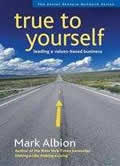 |
True to Yourself Leading a Values-based Business
Many leaders of small businesses want to serve the common good, but everyday pressures can make that extremely difficult. What tools are available to lead an organization that's obligated to more than the financial bottom line? True to Yourself provides potent, practical advice for leaders looking to make their small business profitable and sustainable. (by Mark Albion)
|
| |
| |
 |
Cradle to Cradle (by William McDonough, Michael Braungart )
Remaking the Way We Make Things
Today's "cradle to grave" manufacturing model dates back to the Industrial Revolution and casts off as much as 90 percent of the materials it uses as waste, much of it toxic. The authors argue that products and processes should be designed so that wastes and worn-out products serve as useful manufacturing inputs, not trash and pollution.
|
| |
| |
 |
Red Sky at Morning America and the Crisis of the Global Environment
This book is both alarming and hopeful as it details why efforts to protect Earth's `ng. Speth explains why current approaches to critical global environmental problems—climate change, biodiversity loss, deterioration of marine environments, deforestation, water shortages, and others—don't work, and offers comprehensive new strategies for dealing with environmental threats around the world. (by James Gustave Speth)
|
| |
| |
 |
Our Final Hour: A Scientist's Warning (by Martin J. Rees)
Scientists always seem to be telling us their latest trick for saving the world. In "A Scientist's Warning," Martin Rees is telling us about the tricks that might DESTROY the world. Whether it's biotech gone wrong; plague-wielding terrorists; nuclear accidents or bombs; the global warming threat; or humongous earth-crushing asteroids—Rees catalogs the danger.
|
| |
| |
 |
The Killers Within
The Deadly Rise of Drug Resistant Bacteria
Every day, new strains of bacteria, fungi, and other pathogenic microorganisms are becoming resistant to the antibiotics that once dispatched them with extreme prejudice. "The Killers Within" provides the layman's version of why we're slowly finding ourselves on the losing side of this microscopic chemical warfare. (by M. Shnayerson, M.J. Plotkin)
|
| |
| |
 |
The Four Pillars of Healing (by Leo Galland, M.D.)
Our bodies and minds make up a single complex machine, and the average doctor often has a hard time getting our machines back in tune. That may be because most doctors try to treat the body's systems as separate. Dr. Galland, on the other hand, explains how all the body's systems work together—and how to get them to work together WELL.
|
| |
| |
 |
Environmental/Chemical Toxins and Psychiatric Illness
Psychiatric illness is, in a basic sense, due to one's central nervous system malfunctioning. Scientists have a long way to go before fully understanding the causes of such malfunctioning, but it is becoming clearer that CNS problems can be caused by agents such as insecticides, lead, polybrominated and polychlorinated compounds, chemical weapons, and radiation. Read all about it here. (by James S. Brown)
|
| |
| |
 |
Our Stolen Future (by Colborn, Dumanoski, Myers)
The near-extinction of bald eagles, developmental abnormalities in frogs, reproductive deformities in Florida alligators—such stories are rightly disturbing to nature lovers. But the implications for human health should be disturbing to everyone. "Our Stolen Future" documents the widespread chemical contamination we're all experiencing and the effect it's having on our biology.
|
| |
| |
 |
Silent Spring (by Rachel Carson)
In 1962, Rachel Carson documented the increasing use of dangerous chemical pesticides, the collusion between pesticide manufacturers and government to give the public false confidence in the safety of the products, and the resulting environmental devastation. Little has truly changed since then, and "Silent Spring" remains a scary reminder about the insidious effects chemicals still have on all of us.
|
| |
| |
 |
Jennifer Government: A Novel (FICTION)
"You don't know what these people are like. They don't stop until you make them stop," warns the title character of "Jennifer Government." It's a tale of good guys and bad guys, all gone haywire over corporate power and bigger bottom lines. The novel is fast-paced and well written, and it hides any moral lessons well beneath the engaging plot. (by Max Barry)
|
| |
| |
 |
Crimes Against Nature How George W. Bush and His Corporate Pals Are Plundering the Country and Hijacking Our Democracy
Robert F. Kennedy, Jr. charges that the Bush administration has taken corporate cronyism to such unprecedented heights that it now threatens our health and our national security. They have eviscerated the laws that have protected our nation's air, water, public lands, and wildlife for the past thirty years, enriching the president's political contributors while lowering the quality of life for the rest of us. (by Robert F. Kennedy Jr.)
|
| |
| |
 |
The Everglades: An Environmental History
Designed for both general readers and environmentalists. Discusses the natural and cultural histories of the Everglades as well as the negative impact of drainage, dams, development, and the sugar industry. Provides solutions to restore this unique ecosystem to health. (by David McCally)
|
| |
| |
 |
In Growth We Trust (by Edwin Stennett)
Sprawl, Smart Growth, and Rapid Population Development
Traffic! Sprawl! Water shortages! "In Growth We Trust" unmasks the "growth is good" myth and exposes those who promote the myth for personal profit. How do we rein in mushrooming US population growth and avoid a declining quality of life?
|
| |
| |
 |
Prey (FICTION)
Michael Crichton has thrilled us with fictional tales of huge, man-munching dinosaurs cloned from ancient, amber-stored dino blood. Now he's gone the other direction on the techno-size scale, and nanomachines are the threat his scrambling protagonists must deal with. If you thought mosquitoes and no-see-ums were tough, just wait! (by Michael Crichton)
|
| |
| |
 |
Cat's Cradle (FICTION)
What if a scientist designed a material that solidified water into ice at ordinary temperatures? Kurt Vonnegut's "Cat's Cradle" has been called the first warning about the possibility of nanostructured materials getting out of control. His fans consider it one of his best works of fiction.
(by Kurt Vonnegut)
|
| |
| |
 |
Safe Food: Bacteria, Biotechnology, and Bioterrorism
Marion Nestle illuminates us on how food safety has become as much about economics and special interests as about protecting us from unsafe food, wild gene-manipulation schemes, unwholesome production practices, and food-fouling terrorists. Find out if lobbyists are really the biggest threat to the safety of our food supply. (by Marion Nestle, Mar-2003)
|
| |
| |
 |
Fish, Markets, and Fishermen – The Economics of Overfishing
A significant number of the world's ocean fisheries are depleted, and some have collapsed from overfishing. Although many of the same fishermen who are causing these declines stand to suffer the most from them, they continue to overfish. Why is this happening? What can be done to solve the problem? "Fish, Markets, and Fishermen" explains the complicated problem of overfishing. (by Iudicello, Weber, Wieland)
|
| |
| |
 |
The Empty Ocean (by Richard Ellis)
"The Empty Ocean" tells the story of our continued plunder of life in the sea and weighs the chances for its recovery. Killing has occurred on a truly stunning scale, but the author also finds instances of hope and resilience, of species that have begun to make comebacks when given the opportunity. The book brings to a wide audience a compelling view of the damage we have caused to life in the sea and what we can do about it.
|
| |
| |
 |
A Stain Upon The Sea: West Coast Salmon Farming
Every week, new studies raise alarming questions about the safety of farmed fish and the risk the farms pose to the environment, but governments continue to support expansion of fish farms. "A Stain Upon the Sea" examines the case against this new ocean-based agri-biz and looks at whether we should be concerned about food quality or environmental impacts. (by Stephen Hume, Alexandra Morton, et al)
|
| |
| |
 |
King of Fish: The Thousand-Year Run of Salmon
Presents the science and history of the steady decline in wild salmon populations in Europe, New England, Eastern Canada and the Pacific Northwest. Covers main causes such as river pollution, dams, overfishing, and poorly enforced regulations. (by David R. Montgomery, Oct-2003)
|
| |
| |
 |
Totem Salmon: Life Lessons from Another Species
Chronicles one man's experience leading a band of like-minded citizens in an effort to reestablish the salmon runs in a California river, lobbying for logging restrictions in the river's watershed, dealing with dubious government officials, and doing hands-on work like planting vegetation on the river banks. Classic grassroots action. (by Freeman House. May-2000)
|
| |
| |
 |
Living Downstream
A Scientist's Personal Investigation of Cancer and the Environment
Traces the high incidence of cancer in the author's hometown and other communities around the country, documenting the high levels of environmental toxins in the high-cancer areas.
(by Sandra Steingraber, Sep-1998)
|
| |
| |
 |
Seawater Desalination
Impacts of Brine and Chemical Discharge on the Marine Environment
Are population growth, higher living standards, and increasing demand from industry and agriculture doomed to outpace the supply of fresh water? Get a primer on desalination and its environmental impact.
(by Sabine Lattemann and Thomas Hopner, Apr-2003)
|
| |
| |
 |
Every Drop for Sale: Our Desperate Battle Over Water
Will easy access to fresh water become a luxury? This overview of the future of freshwater resources predicts that water will become a commodity controlled multinational corporations, population growth will far outpace water supplies, and water will be the fulcrum on which 21st century global politics balances. (by Jeffrey Rothfeder, Oct-2001)
|
| |
| |
 |
Troubled Water (by Anita Roddick)
Saints, Sinners, Truth and Lies About the Global Water Crisis
One billion people lack access to clean water. Droughts, floods, and waterborne diseases kill hundreds of millions of people every year. Huge multinational corporations see a profit opportunity unparalleled even by oil or gold. Why are the politics of water so skewed? This book explores the problems and the solutions.
|
| |
| |
 |
Water from Heaven (by Robert Kandel)
We pretty much take water for granted on this planet—or at least we did until recently, when shortages and pollution started reminding us of how precious a commodity water really is. Scientist Robert Kandel explores not just the political history of water and its impact on societies, but the history of water itself, explaining where this essential stuff-of-life came from in the first place. He also delves into water's likely role in Earth's future.
|
| |
| |
 |
The Natural Water Garden (by C. Colston Burrell, ed.)
Features a practical approach to integrating water features into your backyard landscape. Includes how-to info, plant recommendations by region and by function, a resource list, and excellent photographs. You can have your very own wetland! ... or just a normal lined pond.
|
| |
| |
 |
Growing Roses Organically
Your Guide to Creating an Easy-Care Garden Full of Fragrance & Beauty
Rose gardening doesn't have to be about chemical sprays and dusts! Learn the ease and simplicity of the organic approach; know the 100 best roses for organic gardens. (by Barbara Wilde, May-2002)
|
| |
| |
 |
The Flower Farmer
An Organic Grower's Guide to Raising and Selling Cut Flowers
If you want to grow great flowers and lean towards doing it organically, here's how. Based on interviews with hundreds of flower farmers. (by Lynn Byczynski, Jun-1997)
|
| |
| |
 |
The Orchid Thief
The strange, compelling, and true story of about a shifty plant dealer that was arrested with stolen rare orchids, touching off an odd legal controversy involving environmentalists, Native Americans, and orchid-collecting fanatics. (by Susan Orlean, Dec-1998)
|
| |
| |
 |
High and Mighty (by Keith Bradsher)
SUVs—The World's Most Dangerous Vehicles & How They Got That Way
Just what is it that some people hate so much about SUVs? Their gas-guzzling obesity? Their higher pollution levels? Their poor safety ratings on the road? The way Detroit slipped them past many regulations? This book is not just a rant—it uses facts to make the case that SUVs really are the world's most dangerous vehicles.
|
| |
Cell Phones: Invisible Hazards in the Wireless Age —
An Insider's Alarming Discoveries About Cancer and Genetic Damage
by Dr. George Carlo and Martin Schram
See description on Grinning Planet | Check Amazon: Hardcover • Paperback
Deceit and Denial —
The Deadly Politics of Industrial Pollution
by Gerald E. Markowitz, David Rosner
See description on Grinning Planet | Check out on Amazon
Dinner at the New Gene Café —
How Genetic Engineering Is Changing What We Eat, How We Live, and the Global Politics of Food
by Bill Lambrecht
Check out on Amazon
How the Cows Turned Mad
Maxime Schwartz
See description on Grinning Planet | Check out on Amazon
Mad Cow U.S.A.: Could the Nightmare Happen Here?
by John C. Stauber and Sheldon Rampton
See description on Grinning Planet | Check out on Amazon
Pathological Protein, The: —
Mad Cow, Chronic Wasting, and Other Deadly Prion Diseases
by Philip Yam
See description on Grinning Planet | Check out on Amazon
Or search Grinning Planet for more books
Back to top of list
More options:
Similar categories:
|
|
|
|
|
Hey, we don't pick
the Google ads! – GP
|
| |
| CLICKS ON OUR ADS AND PURCHASES VIA OUR AMAZON LINKS HELP SUPPORT THIS FREE SITE... THANKS! |
|
|
|
|